By Alvise Armellini
ROME, July 15 (Reuters) - When Carlo Petrini founded the Slow Food movement in Rome in 1986 to protest the arrival of Italy's first McDonald's, Edward Mukiibi was not yet born.
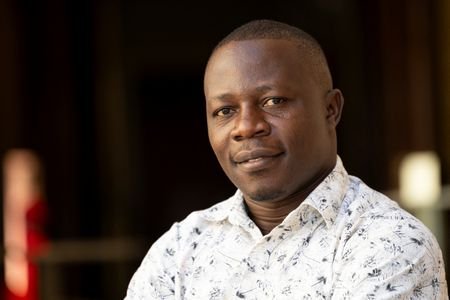
Four decades later, the Ugandan farmer and agronomist is at the helm of the fair food advocacy group and hopes to steer it beyond its Italian roots, while preserving the legacy of its charismatic founder, who died in May.
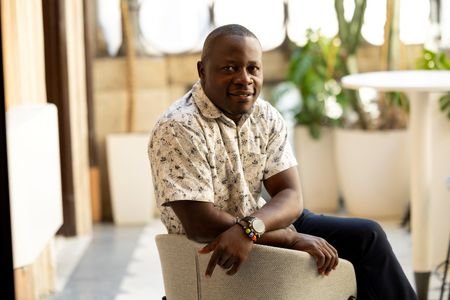
Mukiibi, 39, runs a family farm growing coffee and bananas near the shores of Lake Victoria, and is out to prove that a movement born in Europe can be relevant to communities across the developing world.
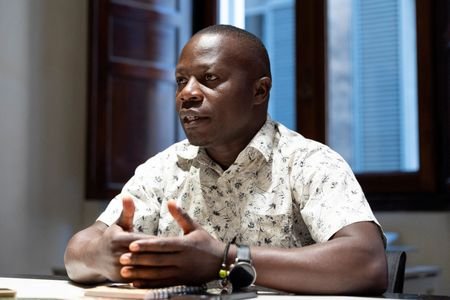
"(Petrini) always wanted Slow Food to go on without him," Mukiibi said, speaking to Reuters in Rome. "So we are ready and prepared to carry his vision forward. The leadership is strong because he has nurtured us, he has built us."
Petrini, a food writer from Piedmont in northwest Italy with roots in far-left activism, transformed a local protest against fast food into a global campaign promoting what Slow Food calls "good, clean and fair food" for all.
Along the way, he became a confidant of Britain's King Charles and the late Pope Francis and one of the world's most recognisable advocates for sustainable agriculture.
Mukiibi, vice-president since 2014 and president since 2022, is up for re-election later this year. His aim is to sustain a movement that started as a defence of traditional Italian food culture in a new era shaped by climate change, corporate agriculture and growing pressure on small farmers.
GOOD FOOD IS NOT A LUXURY
One of his priorities is challenging the perception that sustainable or organic food is the preserve of the wealthy.
"It's a rich-world misconception," he said.
Rural African families often eat organically by default, he said. The challenge is creating food systems that pay farmers fairly while keeping prices affordable for consumers. Shorter supply chains and strong local markets are central to that goal.
"This is one of the key wake-up calls the pandemic gave us. But this has been part of the Slow Food call for the last 40 years: eating local, building local economies, sustaining local production," he said.
Slow Food describes itself as an international movement of local groups and activists, including farmers, food sellers and restaurateurs, with a presence in more than 160 countries.
CONCERN FOR CHINA AND LARGE AGRIBUSINESS
Mukiibi urged governments, especially in the developing world, to listen more to small farmers and local communities, rather than the agenda of "big agricultural lobbies".
He also voiced concern about China's expanding agricultural footprint in Africa, citing Chinese investments in Ugandan fish farms and trade deals with Ethiopian coffee producers.
"China is interested in giving out a lot of money, but also receiving control of our resources in return," Mukiibi said.
"Once the governments are in deep debt to China, they will do everything to clear the debt, even if it means giving out land. It's a new wave of extraction. It has always happened in Africa."
China's foreign ministry, responding to Reuters' request for comment, said Chinese investment in Africa "has effectively promoted Africa's economic development and improvement of people's livelihoods."
FARMING WITH PRIDE
Mukiibi traced his convictions to a childhood spent among farmers and fishermen in Uganda, where he decided to study agronomy to show that farming is "a profession you can do with pride."
He discovered Slow Food in 2008, after a formative setback. As a university student, he took part in a monocultural maize crop project that focused on maximising production. It failed completely during a drought.
Discovering Slow Food was, he said, a "life-changing moment".
"I'm not alone. I'm with a family of millions of people who are believing and working towards the same thing," Mukiibi said. "This is the right path for the planet and for all the farmers."
(Reporting by Alvise Armellini, additional reporting by Xiuhao Chen in Beijing; editing by Keith Weir and Ros Russell)