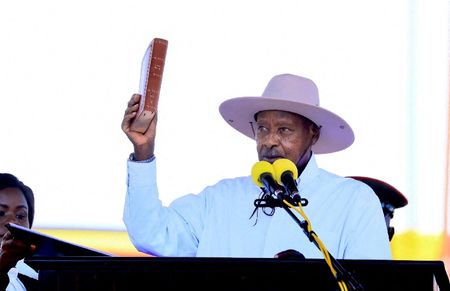
KAMPALA, May 18 (Reuters) - Uganda's President Yoweri Museveni signed into law a contentious measure to curb foreign influence after parliament scaled back provisions that had drawn criticism from financial institutions over potentially hampering remittances and development work.
The bill criminalises promotion of the "interests of a foreigner against the interests of Uganda" and bans anyone working on behalf of foreign interests from developing or implementing policy without government approval.
Rights groups have said that such broad language would allow the government to criminalise just about any form of political opposition. The government has accused critics of exaggerating the bill's impact.
Museveni, who has been in power since 1986, has regularly decried outside influence in Uganda, accusing domestic political rivals of receiving funding from abroad.
His office announced late on Sunday that he had signed the "Protection of Sovereignty" bill, which parliament had adopted on May 5. Penalties for violations include up to 10 years in prison and steep cash fines.
The final legislation softened several earlier provisions that had been criticised by economic institutions.
One that required any Ugandan receiving money from abroad to register as a foreign agent and disclose incoming funds was amended to apply only to people receiving funds for political purposes that advance foreign interests.
Remittances from Ugandans living abroad are an important source of foreign exchange for the east Africa nation.
Central Bank governor Michael Atingi-Ego had warned last month that the law could diminish financial flows into Uganda and risked running down foreign exchange reserves, in a situation he called an "economic disaster for our country".
The World Bank also criticised the earlier proposal, saying it could expose to criminal liability a broad range of "routine development activities".
Neither the Central Bank nor the World Bank have commented on the amendments to the original bill.
(Editing by Vincent Mumo Nzilani, Clarence Fernandez and Alison Williams)

