By Andy Bruce and Andrew MacAskill
MANCHESTER, Feb 27 (Reuters) - Prime Minister Keir Starmer's Labour Party suffered an embarrassing election defeat on Friday in an area of Greater Manchester that it had dominated for almost a century, a loss that underscores the breakdown of Britain's two-party politics.
The loss in one of Labour's safest seats, in the biggest electoral test in almost a year, puts further pressure on Starmer to prove that he should keep his job following weeks of political turmoil and calls for him to resign.
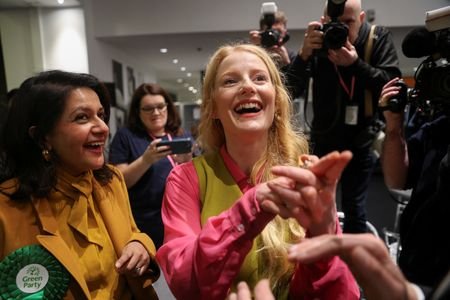
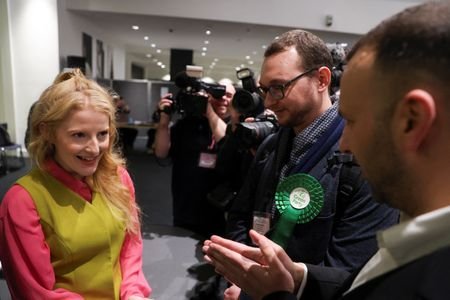
The left-wing Green Party's Hannah Spencer won the contest for the vacant parliamentary seat of Gorton and Denton, with Nigel Farage's anti-immigration Reform UK party coming second, and Labour pushed into third place.
The result was "clearly disappointing", said Labour Party chair Anna Turley.
Starmer had staked his personal authority on Labour winning the seat by blocking one of his rivals, the popular Manchester Mayor Andy Burnham, from standing, and by visiting the constituency this week, when British leaders normally avoid campaigning in local areas if they risk losing.
The defeat comes after Starmer faced the most dangerous moment of his premiership this month when some of his lawmakers said he should resign over his decision to appoint Labour veteran Peter Mandelson as ambassador to Washington, despite his links to the late sex offender Jeffrey Epstein.
DEFEAT PILES PRESSURE ON STARMER BEFORE MAY ELECTIONS
Labour won just over half the vote in Gorton and Denton at the last general election in 2024. But Starmer's unpopularity, sluggish economic growth and a series of scandals and policy U-turns contributed to a deep fall in the party's support.
The Green Party won 40.7% of the vote on Friday in an election triggered when a member of parliament resigned for health reasons. Nigel Farage's Reform Party came second with 28.7% of the vote and Labour finished third with 25.4%.
Starmer was unlikely to face an immediate threat to his position if he lost, Labour lawmakers said before the vote.
But he could be challenged after May elections, they added, when Labour is expected to fare badly in local and regional polls, including for the parliaments in Wales and Scotland.
OLD LOYALTIES FRACTURE AS VOTERS SHIFT TO INSURGENT PARTIES
Gorton and Denton - which includes the area where the Gallagher brothers who formed Oasis grew up - was once part of Labour's old coalition of industrial areas across England that was considered so impregnable that it was called the Red Wall.
But the election contest was an example of how the British electorate has become more volatile, with declining loyalty and growing support for insurgent parties on the right and left of politics.
It was the first time the Green Party, which supports leaving NATO and legalising recreational drugs, had won a one-off election for a seat in parliament or one in the north of England. That takes the party's total number of seats in the House of Commons to five out of 650.
John Curtice, Britain's most respected pollster, said the result was "very poor" for Labour and means the "future of British politics looks more uncertain than at any stage" since the end of World War Two.
Nationally, five parties, including the Greens, Reform and the Liberal Democrats, are polling double-digit percentages, threatening the Labour-Conservative duopoly of the last century.
The Labour government's main challenge at the next election is likely to come from Reform UK, which holds only a handful of seats in parliament, but has been leading in opinion polls for more than a year.
However, Friday's result shows how Reform could struggle to win in some places, particularly ethnically diverse urban areas.
Reform's candidate Matthew Goodwin alienated some voters in Gorton and Denton, which had a large number of Muslim residents, with his past comments that millions of British Muslims "are fundamentally opposed to British values and ways of life".
(Editing by Elizabeth Piper, Muralikumar Anantharaman, Clarence Fernandez and Michael Perry)