By William James
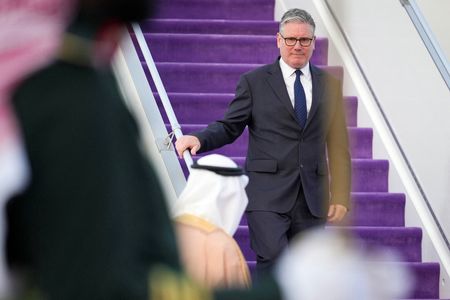
LONDON, April 9 (Reuters) - Prime Minister Keir Starmer on Thursday said the Iran war must become a turning point for Britain after two decades of crises, and he promised to strengthen the country's economy and military to cope with a more "volatile and dangerous" world.
On Tuesday, U.S. President Donald Trump announced a ceasefire in the six-week-old Iran conflict, but there is no sign yet of Tehran lifting its near-total blockade of the Strait of Hormuz, which has caused the worst disruption to energy supplies in history.
Starmer said the crisis, which has already pushed up fuel prices in Britain and is expected to drive further inflation and economic disruption, had to become "a line in the sand" for the country.
"Britain has been buffeted by crises for nearly two decades now," he wrote in the Guardian newspaper, citing the 2008 global financial crash and the austerity that followed it, Brexit, the COVID pandemic and Russia's invasion of Ukraine.
"The war in Iran must now become a line in the sand, because how we emerge from this crisis will define all of us for a generation. And instead of hoping to return to the world of 2008, we will forge a new path for Britain – one that strengthens our energy, our defence and our economic security in a new age."
STARMER LOOKS TO REVIVE POLITICAL FORTUNES
Starmer became Prime Minister in 2024 after a landslide election victory for his Labour Party, but he has struggled to implement the changes he promised voters, derailed by tight public finances, internal party disputes and global instability.
His party has fallen behind the right-wing populist Reform UK, led by Nigel Farage, in opinion polls ahead of the country's next election due in 2029.
However the British public has broadly supported his decision not to join Trump's offensive action against Iran - much to Trump's annoyance.
Starmer, seeking to capitalise on that, said his approach in responding to the effects of the Iran crisis was rooted in reviving British national interests and building resilience.
"We will not look backwards. We will not aim to recreate the conditions of a world that has now passed us by, and we will build a Britain that is stronger, more secure and more resilient," he said.
"That is what this moment demands: and Britain will not be blown off course."
(Reporting by William James; Editing by David Gregorio)