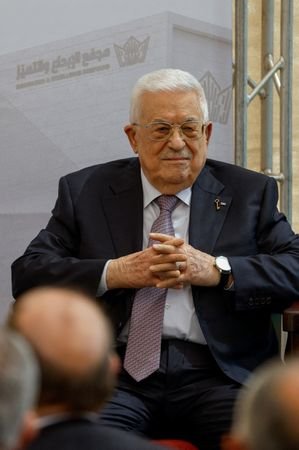
UNITED NATIONS, Sept 17 (Reuters) - The United Nations General Assembly voted on Thursday to allow Palestinian President Mahmoud Abbas to address the annual gathering of world leaders next week via video - for the second year in a row - after the United States again denied him a visa to travel to New York.
The resolution received 152 votes in favor and three votes against, while four countries abstained. It also allows Abbas and any other high-level Palestinian officials to take part in U.N. meetings or conferences via video over the next year if they are prevented from traveling to the United States.
The US said last year that Abbas and about 80 other Palestinians would be affected by its decision to deny and revoke visas from members of the umbrella Palestine Liberation Organization and the West Bank-based Palestinian Authority. Washington announced on Wednesday that it had extended the visa bans.
"If the PA wants to be treated as a partner, it must stop subsidizing terror and stop using diplomatic theater as a substitute for serious governance," Deputy US Ambassador to the United Nations Tammy Bruce told the assembly before the vote.
Palestinian leaders rejected and condemned the move by the United States, Palestinian UN envoy Riyad Mansour told the General Assembly.
Without naming specific officials, the US State Department said on Wednesday it would extend visa sanctions against Palestinian officials over actions they took to "internationalize the Israeli-Palestinian conflict," including pursuing cases against Israel at international tribunals.
A Palestinian official, who spoke on condition of anonymity, confirmed Abbas' visa had been denied.
Under a 1947 U.N. "headquarters agreement," the U.S. is generally required to allow access for foreign diplomats to the UN in New York. However, Washington has said it can deny visas for security, extremism and foreign policy reasons.
(Reporting by Michelle Nichols, editing by Cynthia Osterman)