By David Brunnstrom and John Irish
April 3 (Reuters) - The U.N. Security Council is now expected to vote next week on a Bahraini resolution to protect commercial shipping in and around the Strait of Hormuz, diplomats said on Friday, but veto-wielding China has made clear its opposition to authorizing any use of force.
A meeting of the Council's 15 members was initially set for Friday, then rescheduled for Saturday. Several diplomats said it had now been postponed until next week, with no new date yet announced.
Bahrain's U.N. mission did not immediately respond to a request for comment on the reason for the delay. The resolution has faced resistance from China, Russia and others and has been toned down from its original form.
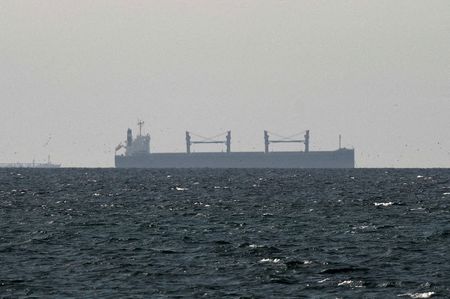
Oil prices have surged since the U.S. and Israel struck Iran at the end of February, unleashing a conflict that has run for more than a month and largely closed the shipping artery.
Bahrain, the current chair of the Security Council, finalized a draft on Thursday that would authorize "all defensive means necessary" to protect commercial shipping.
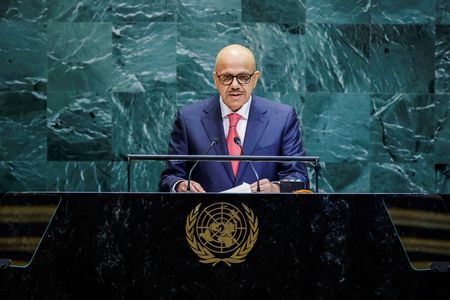
Bahrain's Foreign Minister Abdullatif bin Rashid Al Zayani had told the council on Thursday that a vote would be held on Friday, "God willing," and added that Bahrain looked forward to a "unified position from this esteemed council."
Bahrain, backed in its efforts to secure a resolution by other Gulf Arab states and Washington, had previously dropped an explicit reference to binding enforcement in a bid to overcome objections from other nations, particularly Russia and China.
A fourth draft of the resolution was put under a so-called silence procedure for approval until Thursday at noon (1600 GMT). Diplomats said the silence had been broken, by China, France and Russia, but a text was subsequently finalised, or "put in blue" in U.N. parlance, meaning a vote can take place.
The finalized draft authorizes the measures "for a period of at least six months ... and until such time as the council decides otherwise."
However, in remarks to the Security Council on Thursday morning, China's U.N. envoy Fu Cong opposed authorizing force.
He said such a move would be "legitimizing the unlawful and indiscriminate use of force, which would inevitably lead to further escalation of the situation and lead to serious consequences."
A Security Council resolution requires at least nine votes in favor and no vetoes from the five permanent members, Britain, China, France, Russia and the U.S.
U.S. President Donald Trump has vowed to continue attacks on Iran and said on Friday that the U.S. can open the Strait of Hormuz with a little more time, even as pressure mounts for his administration to find a quick resolution to the war.
Britain hosted a meeting on Thursday with more than 40 countries on efforts to reopen and ensure safe passage through the Strait of Hormuz and also expressed support for Bahrain's move to secure a resolution on the issue.
(Reporting by David Brunnstrom; additional reporting by John Irish in Paris; Editing by Nia Williams, Alistair Bell, Clarence Fernandez and David Gregorio)