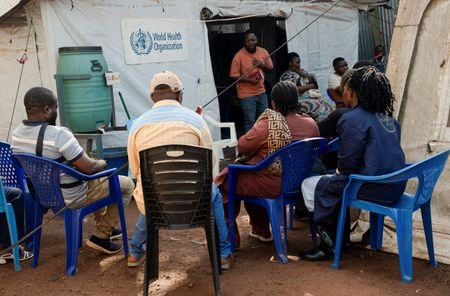
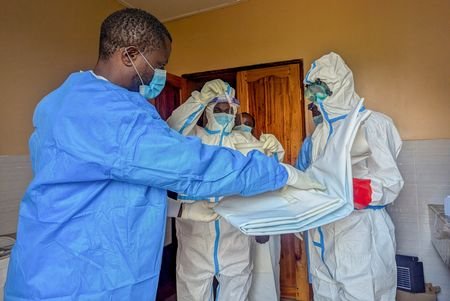
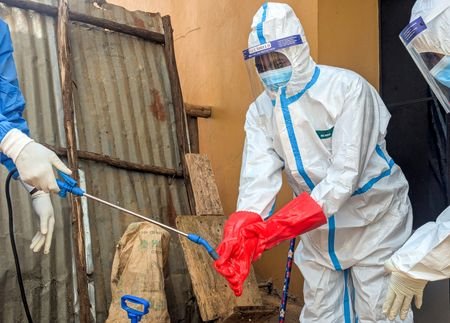
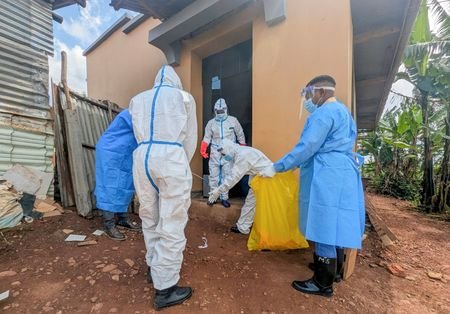
GENEVA, Sept 15 (Reuters) - U.N. officials said on Tuesday that efforts to curb Ebola in eastern Congo were beginning to show results but stressed that the epidemic remained "massive" and would take months to bring under control.
"It remains a deadly and a massive epidemic. There are some areas of progress, but nonetheless, in other areas, we continue to see growth in cases," Julien Harneis, the U.N. special Ebola coordinator, told a Geneva press briefing.
The outbreak is the second most lethal on record, behind only one in West Africa that lasted from 2014 to 2016.
Asked about reports that the epidemic had reached a turning point, the World Health Organization's Olivier le Polain said: "It's too early to confidently say we have passed a peak."
On Saturday, Congo Health Minister Samuel Roger Kamba said there were "encouraging signs" in the fight against Ebola since "the peak reached in mid-August" and that transmission "has been gradually slowing down".
He said daily new cases had dropped from approximately 120 "at the peak of the epidemic" to around 80, and that 10 of the 62 affected health zones had recorded no new cases for more than 22 days.
"To me, these figures are a positive sign. They demonstrate that the efforts deployed on the ground are yielding results and that our response strategy is beginning to bend the transmission curve," he said.
"However, we must remain fully mobilised. While these results are encouraging, they must not lead us to lower our guard."
There have been 7,258 confirmed cases and 3,510 deaths across seven provinces, according to government figures published on Tuesday.
(Reporting by Emma Farge; Writing by Robbie Corey-Boulet; Editing by Miranda Murray, Alexandra Hudson)