By Shariq Khan and Scott DiSavino
NEW YORK, May 12 (Reuters) - The U.S. Energy Information Administration on Tuesday revised its earlier forecasts to reflect a much bigger and lengthier hit to global oil supplies from the Iran war than it previously projected, highlighting the uncertainty that has roiled broader energy markets since the conflict began three months ago.
Energy analysts have found it difficult to predict the length and depth of disruptions to oil markets from the war in the Middle East, especially as U.S. President Donald Trump has issued contradictory statements claiming one day that the war could end within weeks, but then threatening to fight until he sends Tehran back to the "stone ages."
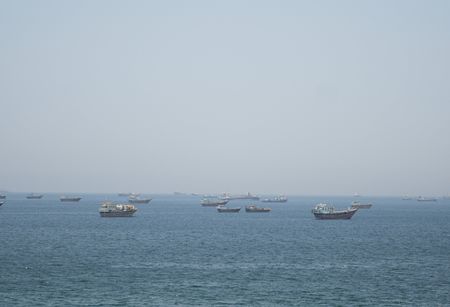
Meanwhile, Iran's blockade of the Strait of Hormuz continues to wipe off millions of barrels of global oil supply every day the conflict drags on. The EIA on Tuesday said it now assumes the Strait of Hormuz will be effectively closed through the end of May, moving back its earlier assumption that the closure would last through April.
Further, the agency estimates some 10.5 million barrels of oil output was shut in across the Middle East in April, which will rise to a peak of 10.8 million bpd this month as Middle Eastern storage tanks hit maximum capacity. The increase is partly because the EIA expects Iran will be forced to cut oil output due to the U.S. blockade of the country's exports through the Strait of Hormuz, the agency said.
The EIA had earlier forecast production losses would peak at 9.1 million bpd in April.
The changes in assumptions point to much bigger draws from global oil stockpiles compared to prior expectations, keeping oil prices elevated, the EIA said. The agency forecast global oil inventories will fall 2.6 million bpd this year, up from its earlier estimate of an about 300,000 bpd draw from stockpiles.
Brent crude oil prices will average around $106 per barrel in May and June, before declining to average around $89 a barrel in the fourth quarter of this year as Middle East production starts to recover, the EIA said.
If the Strait of Hormuz remains shut through June, one month longer than the current assumption, oil prices would be about $20 a barrel higher over the near-term compared to current forecasts, the EIA said.
DEMAND DESTRUCTION
In addition to the revisions to its supply forecasts, the EIA also cut its global oil demand forecasts. Global oil demand will now increase by about 200,000 bpd this year, down from last month's forecast of 600,000 bpd of growth, the EIA said.
"We expect higher prices will bring about a reduction in oil demand, which will help move the oil market towards balance," the EIA said in its short-term energy outlook report.
"The longer that shut-in production volumes and disruptions to oil flows persist, the larger we expect this price response to be," the agency said.
Independent analysts have also said multi-year-high fuel prices in the United States could weigh on demand during the peak summer travel season, while also posing a major political challenge for Trump just months ahead of midterm elections in November.
The U.S. Energy Information Administration now expects U.S. retail gasoline prices to average $3.88 a gallon this year, about 18 cents more than its prior forecast issued in April, according to the agency's monthly short-term energy outlook report.
(Reporting by Shariq Khan and Scott DiSavino in New York; Editing by Chizu Nomiyama and Andrea Ricci )