
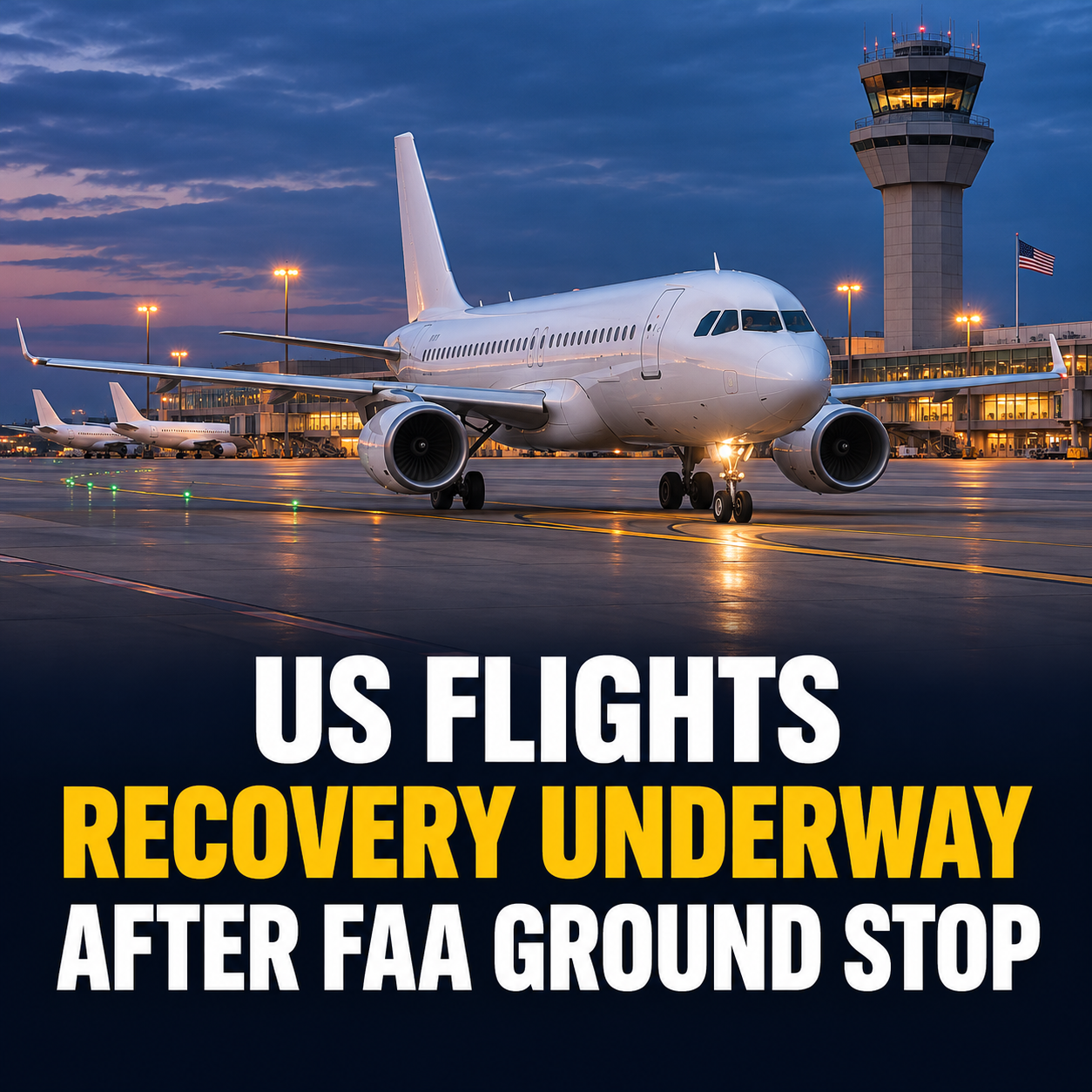
US air travel was recovering heading into Monday, 16 November, after a communications failure prompted the Federal Aviation Administration to pause most departures nationwide on Friday. The FAA lifted the ground stop that evening, but airlines spent the weekend clearing the backlog and getting aircraft and crews back into position.
More than 11,500 US flights were cancelled or delayed on Sunday, according to FlightAware figures reported by Reuters. US Transportation Secretary Sean Duffy expected schedules to return to normal on Monday. That was a forecast for the system as a whole; individual flights could still be disrupted.
What the FAA ground stop did
The FAA said the technical problem began at about 3.30pm US Eastern time on Friday, 13 November. Departures were held while controllers continued handling aircraft already in the air. The agency said air traffic resumed at about 8.15pm Eastern time once the system had stabilised.
The FAA linked the disruption to a surge in network traffic that affected the systems controllers use for communications and radar. Network maintenance was under way before the failure, and investigators are examining what happened. The FAA and its contractor, L3Harris, had not established the root cause in the updates reviewed.
Why delays continued after flights resumed
Clearing a flight to take off again is only one step. Planes that missed earlier journeys may be at the wrong airports, crews may need to be reassigned, and passengers whose flights were cancelled still need seats. Those problems can carry over to the next day even after the original fault has been isolated.
Reuters reported about 2,100 cancellations and 9,400 delays on Sunday. FlightAware had recorded 88 Monday cancellations as of Sunday evening in the US, an early sign of improvement rather than a final Monday count.
What it means for passengers
Check your airline’s app for the status of each flight and any connecting leg before leaving for the airport. Under US Department of Transportation rules, passengers whose flights to, from or within the US are cancelled are entitled to a refund if they decline alternative transport or other compensation.
The wider question for the FAA is why a fault linked to routine network work was able to disrupt departures across the country. Restoring flight schedules removes the immediate backlog; the investigation will determine what needs to change to prevent a repeat.
Sources
Federal Aviation Administration — nationwide ground stop questions and answers
Reuters — disruption figures and expected recovery
Associated Press — flight recovery and information for passengers
US Department of Transportation — automatic refund rule