July 7 (Reuters) - The U.S. military unleashed a new wave of strikes against Iran on Tuesday and revoked a license allowing the country to sell oil after three tankers were hit by projectiles in the Strait of Hormuz, putting pressure on an already fragile ceasefire.
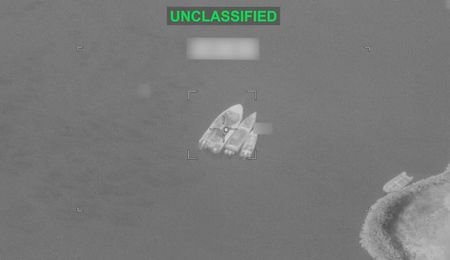
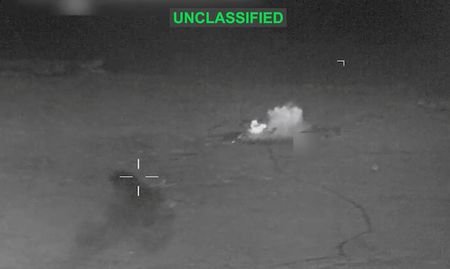
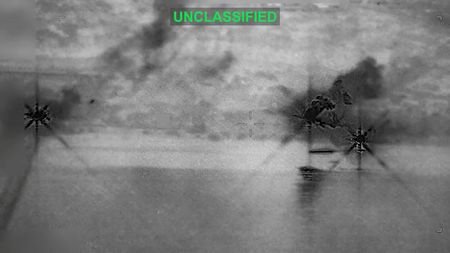
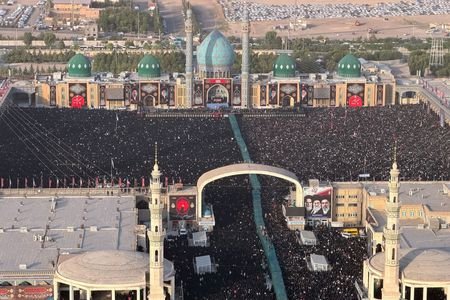
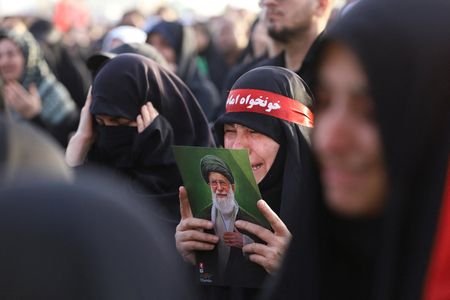
After a day in which huge crowds mourned Iran's slain Supreme Leader Ayatollah Ali Khamenei in the holy city of Qom, U.S. Central Command said it completed strikes that hit over 80 targets in an effort to impose what it called heavy costs. The military command said it struck more than 60 small boats of the Islamic Revolutionary Guard Corps to degrade Iran's ability to attack commercial shipping.
"The unwarranted aggression by Iranian forces is a clear and dangerous violation of the ceasefire and undermines freedom of navigation," CENTCOM said in a statement.
Iran's top joint military command, Khatam al-Anbiya Central Headquarters, denounced the U.S. strikes as a "blatant act of aggression," threatened a "crushing response," and warned that Tehran would not allow U.S. interference in the management of the strait.
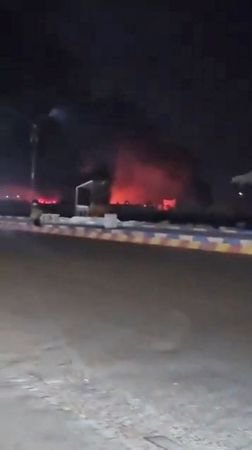
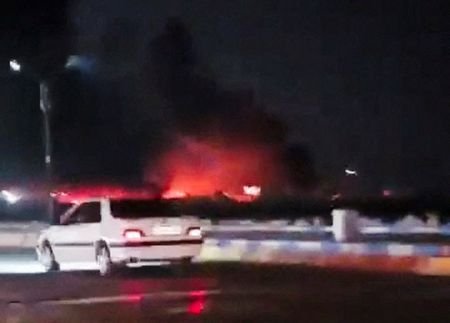
Iranian media reported explosions early Wednesday local time on Iran's main oil hub of Kharg Island, on Qeshm Island and in the southern port cities of Sirik and Bandar Abbas. No civilian deaths were reported, but several people were injured by shrapnel from an "enemy projectile" that hit a commercial pier in Sirik, according to an Iranian state TV reporter. The reports said strikes also hit fishing piers in Sirik and in Bandar Abbas, where several fishing boats were set ablaze.
Iran's Press TV said several blasts were heard on Kharg Island in southern Iran. The report did not provide details on the cause of the explosions, possible damage or casualties. The CENTCOM statement made no mention of Kharg Island, from which Iran exports 90% of its crude oil. The island was last attacked by the U.S. in April.
A U.S. official told Reuters that strikes targeted Iranian air defense systems, coastal surveillance systems, surface-to-air missiles, anti-ship cruise missiles and drone launch sites.
The incidents were only the latest threat to the ceasefire agreement the U.S. and Iran struck last month, pausing the conflict that started in February with U.S. and Israeli strikes across the Islamic Republic. In a potentially major blow to that agreement, Washington moved on Tuesday to withdraw a key concession that had allowed Iran to sell oil on international markets.
Oil prices rose more than 3% after the U.S. announced the move.
A U.S. official said earlier that negotiators continued to work in good faith toward a final agreement with Iran. But control of the strait has given Tehran immense leverage, effectively allowing it to force a stalemate with the world's most powerful military. Analysts say Tehran uses attacks on ships to underscore that leverage as it negotiates a long-term peace deal with the U.S.
Under the interim U.S.-Iran agreement, the U.S. Treasury issued a June 22 general license to allow the sale of crude oil and petrochemical and petroleum products of Iranian origin through August 21. In revoking that license on Tuesday, it gave Iran until July 17 to wind down any transactions.
ANY MEASURE NECESSARY
Iran's foreign ministry condemned the move as a breach of the framework agreement to end the war and said Washington would bear responsibility for the consequences.
The ministry said early on Wednesday that Iran would take any measure it deemed necessary to safeguard its interests and national security.
Qatar blamed Iran for attacking the vessels, including the huge Qatari liquefied natural gas tanker, the Al Rekayyat, which reported being struck overnight by a drone that caused a fire in its engine room. The crew were safe and being evacuated.
A Saudi-flagged crude oil tanker, believed to be the supertanker Wedyan, was also damaged off Oman, maritime security sources said. The cause was not immediately clear.
Qatar's foreign ministry said it had summoned Iran's deputy ambassador and handed him a protest note following the attack on the tanker.
Iran's foreign ministry said Qatar's accusations were perplexing and that Tehran was diligently fulfilling its commitments but asserted that commercial vessels faced risks for using routes not coordinated with Iran.
A second U.S. official, speaking on condition of anonymity, said initial indications were that Iran had fired at three commercial vessels.
Iran's clerical rulers aim to install a permanent system to collect fees in what would amount to a huge shift of the balance of power in a region where Washington has long acted as guarantor of security.
At home, the leadership has used the mourning for Khamenei that began last week to show its control after Khamenei was killed with his daughter, granddaughter, son-in-law and daughter-in-law on the war's first day.
The caskets of the slain leader and family were driven through the streets of the seminary city of Qom on Tuesday. Iranian state media later showed what it said was footage of an aeroplane carrying Khamenei's coffin at the airport of the Shi'ite holy shrine city of Najaf in neighbouring Iraq.
Iranian President Masoud Pezeshkian, who was in Iraq to participate in the funeral ceremonies, left for Iran after the U.S. strikes on southern Iran, state television reported.
The ceasefire was intended to provide a 60-day window for negotiations on a permanent agreement, but indirect talks in Qatar ended last week with no sign of headway.
U.S. President Donald Trump has repeatedly threatened to resume bombing, most recently on Monday when he told reporters in the Oval Office: "We're either going to make a deal or we're going to finish the job...We can knock down their bridges in one hour, we can knock out their energy supply."
Iran's Foreign Minister Abbas Araqchi said that under the terms of the interim ceasefire memorandum, negotiations on the final deal would "not commence if threats continue".
(Reporting by a Reuters team in Tehran and Reuters bureaux; Writing by Peter Graff, William Maclean and David Morgan; Editing by Ros Russell, Sanjeev Miglani, Don Durfee, Lincoln Feast and Stephen Coates)