By Jonathan Saul
LONDON, March 10 (Reuters) - The U.S. Navy has refused near-daily requests from the shipping industry for military escorts through the Strait of Hormuz since the start of the war on Iran, saying the risk of attacks is too high for now, according to sources familiar with the matter.
The Navy's assessments spell continued disruption to Middle East oil exports and reflect a divergence from President Donald Trump’s statements that the U.S. is prepared to provide naval escorts whenever needed to restart regular shipments along the key waterway.
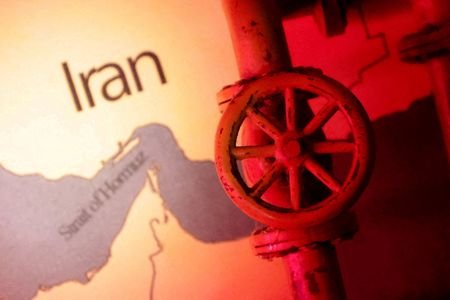
Shipping along the narrow strait has all but halted since the start of the U.S.-Israeli war on Iran more than a week ago, preventing exports of around a fifth of the world’s oil supply and sending global oil prices surging to highs not seen since 2022.
A senior official with Iran's Revolutionary Guards has said the strait is closed and Iran will fire on any ship trying to pass, Iranian media reported last week. Several ships have already been hit.
The U.S. Navy has held regular briefings with shipping and oil industry counterparts and has said during those briefings it is unable to provide escorts for the time being, three shipping industry sources familiar with the matter said.
The sources, who declined to be identified due to the sensitivity of the matter, said the shipping industry has been making requests almost daily during the calls for naval escorts through the strait.
One of the sources said the Navy’s assessment during Tuesday’s briefing had not changed and that escorts would only be possible once the risk of attack was reduced.
The Pentagon did not immediately respond to a request for comment.
PRESIDENT PROMISES NAVAL ESCORTS
Trump has said repeatedly in recent days that the United States is prepared to escort tankers through the Strait of Hormuz when necessary.
"When the time comes, the U.S. Navy and its partners will escort tankers through the strait, if needed. I hope it's not going to be needed, but if it's needed, we'll escort them right through," he said on Monday during a press conference at his Mar-a-Lago resort in Florida.
The U.S. military has started looking at options to potentially escort ships through the strait, should it be ordered to do so, General Dan Caine, chairman of the Joint Chiefs of Staff, said on Tuesday.
"We're looking at a range of options there," Caine told reporters at the Pentagon.
A U.S. official told Reuters the U.S. military has not yet escorted any commercial ships through the strait. Earlier in the day, U.S. Secretary of Energy Chris Wright deleted a post on X in which he said the Navy had successfully escorted one through.
While there have been some voyages through the waterway in recent days, the majority of shipping traffic remains on hold with hundreds of ships anchored.
SECURITY CHALLENGES MOUNT IN STRAIT
Saudi Arabia's Aramco, the world's top oil exporter, said on Tuesday there would be "catastrophic consequences" for the world's oil markets if the war on Iran continues to disrupt shipping in the Strait of Hormuz.
Maritime security specialists and analysts said securing the strait will be difficult, even if the effort involves an international coalition, because of Iran’s ability to deploy mines or cheaply made attack drones.
"Neither France, the United States, an international coalition or anybody is in a position to secure the Strait of Hormuz," said Adel Bakawan, director of the European Institute for Studies on the Middle East and North Africa.
Last week, Iran used a remote-controlled boat laden with explosives to damage a crude oil tanker anchored in Iraqi waters, according to initial assessments from two Iraqi port security sources.
A maritime security source said securing the strait could require the U.S. to take control of Iran's vast coast.
"There are not enough naval vessels to do that and the risks remain high even with an escort. One or two vessels can be overwhelmed by a swarm (of fast boats or drones)," the source said.
The Pentagon renewed threats on Tuesday to hit Iran harder unless shipments can flow through and said it was striking Iranian mine-laying vessels and mine-storage facilities.
(Reporting by Jonathan Saul in London; Idrees Ali and Phil Stewart in Washington; Arathy Somasekhar in Houston and John Irish in Paris; Editing Richard Valdmanis and Lisa Shumaker)