By Michael Martina and Yomna Ehab
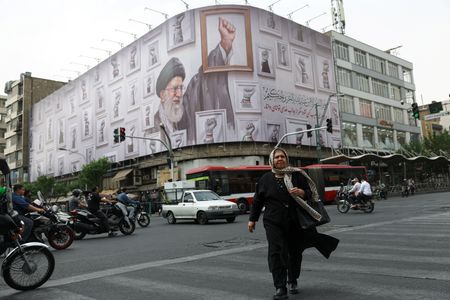
HELSINGBORG/DUBAI, Sweden, May 22 (Reuters) - The United States has seen some progress towards a deal with Iran but more work is required, Secretary of State Marco Rubio said on Friday, while Iran's foreign ministry spokesman said the two sides' differences were deep and significant.
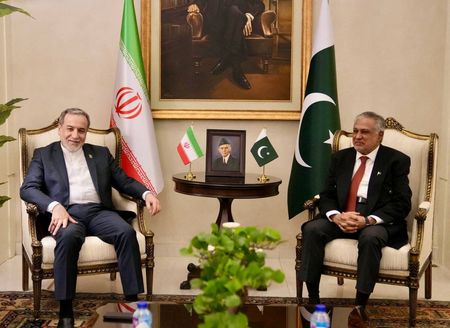
Intensifying diplomacy to end the conflict, Pakistan's military chief arrived in Tehran on Friday to press on with mediation efforts, and Iranian media reported that Iran's foreign minister and Pakistan's interior minister had met there.
Qatar also sent a negotiating team, which is working in coordination with the United States, to the Iranian capital to try to resolve the sides' main differences, six weeks into a fragile ceasefire.
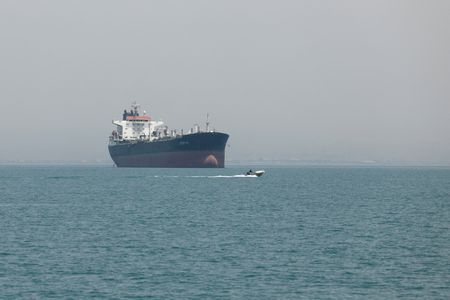
While some gaps have been narrowed, there are still sticking points over Iran's enriched uranium and control over the Strait of Hormuz, whose closure since the start of the war has triggered a global energy crisis.
"There's been some progress. I wouldn't exaggerate it. I wouldn't diminish it," Rubio told reporters after a meeting of NATO ministers in Helsingborg in Sweden. "There's more work to be done. We're not there yet. I hope we get there."
Iran's semi-official Tasnim news agency, citing a source close to the negotiations, said negotiations were continuing. The source added that progress had been made on some issues, but no agreement would be reached until all disputed matters are resolved.
Rubio reiterated comments made on Thursday that Iran's plans for a tolling system for the strait through which a fifth of the world's oil and liquefied natural gas flows were "unacceptable".
"We're dealing with a very difficult group of people, and if it doesn't change, then the president's been clear he has other options," Rubio said.
President Donald Trump said on Friday he was skipping his eldest son's wedding this weekend because he needs to remain in Washington "during this important period of time," without elaborating.
Two days after presenting the Iranians with the latest U.S. message in negotiations, Pakistani Interior Minister Syed Mohsin Naqvi held another round of talks with Iranian Foreign Minister Abbas Araqchi in Tehran, Tasnim reported. Pakistan's army later announced Field Marshal Asim Munir's arrival in Tehran but gave no further details.
Despite the intensifying mediation efforts, Iran's foreign ministry spokesman, Esmaeil Baghaei, was quoted by IRNA news agency as saying diplomacy takes time and suggesting that the sides had not reached a point where an agreement was close.
He said nuclear issues were not being discussed and that a conclusion would not be reached if the U.S. sought to delve into details about highly enriched uranium in Iran.
The U.S. and Israel say their war aims are to curb Iran's support for regional militias, dismantle its nuclear program, destroy its missile capabilities and make it easier for Iranians to topple their rulers.
But Iran has so far retained its stockpile of near-weapons-grade enriched uranium and its ability to threaten neighbours with missiles, drones and proxy militias.
UNCERTAINTY FUELS OIL-PRICE GAIN
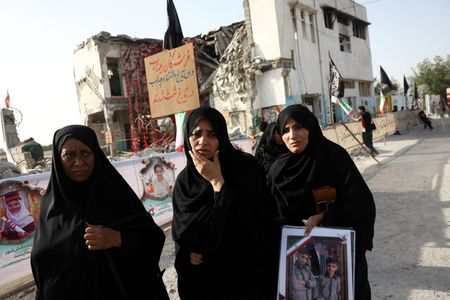
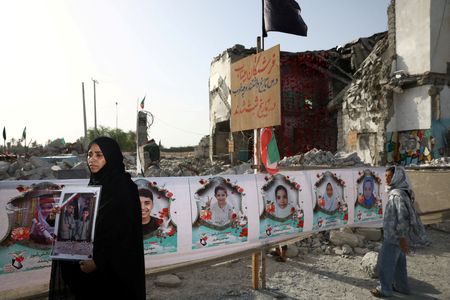
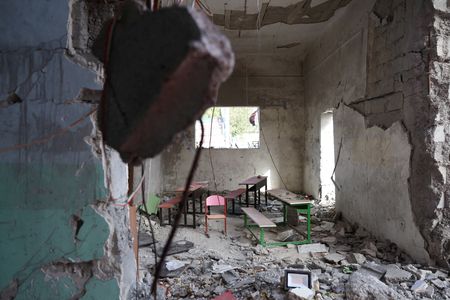
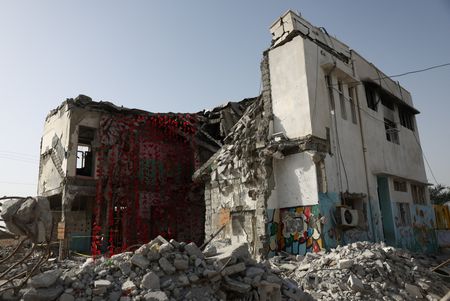
After U.S.-Israeli airstrikes began on February 28, Iran fired at Gulf States that host U.S. military bases and the war reignited conflict between Israel and militant group Hezbollah in Lebanon. Thousands have been killed in Iran and Lebanon.
The war has also created turmoil in the global economy, with the surge in oil prices stoking fears of rampant inflation.
Major stock indexes rose on Friday, with the blue-chip Dow hitting a record high, but Treasury yields dipped as investors weighed the likelihood of a near-term deal to end the war.
The U.S. dollar was near its highest level in six weeks on Friday amid the uncertainty over peace talks, while oil prices climbed.
Trump said the U.S. would eventually recover Iran's stockpile of highly enriched uranium - which Washington believes is destined for a nuclear weapon, though Tehran says it is intended purely for peaceful purposes.
Two senior Iranian sources told Reuters before Trump's comments that Iranian Supreme Leader Ayatollah Mojtaba Khamenei had issued a directive that the uranium should not be sent abroad.
Trump faces domestic pressure with the approach of November midterm elections, with Americans angry over the surge in fuel prices and his approval rating near its lowest level since he returned to the White House last year.
Tehran submitted its latest offer to the U.S. earlier this week.
Iran's descriptions suggest it largely repeats terms Trump previously rejected, including demands for control of the Strait of Hormuz, compensation for war damage, lifting of sanctions, release of frozen assets and the withdrawal of U.S. troops.
(Reporting by Reuters bureaus; Writing by Kate Mayberry, Sharon Singleton, Timothy Heritage and Patricia Zengerle; Editing by Stephen Coates, Gareth Jones, Aidan Lewis and Cynthia Osterman)