By Idrees Ali and Enas Alashray
WASHINGTON/DUBAI, June 26 (Reuters) - The U.S. military attacked Iran on Friday in response to an Iranian drone strike on a cargo ship in the Strait of Hormuz, throwing the fate of the interim peace deal recently agreed between the two countries into question.
U.S. Central Command said aircraft struck missile and drone storage locations and coastal radar sites. Iranian media said a projectile struck an area around a pier in Sirik, a city on the shores of the strategic waterway.
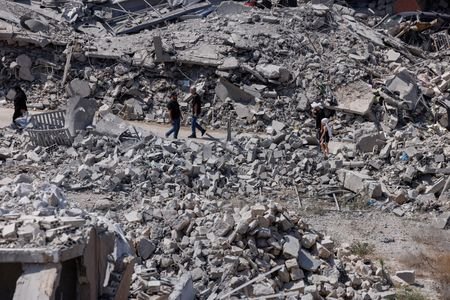
Elsewhere there were signs of progress, however, as Israel and Lebanon signed an agreement to end the fighting between Israel and Iran-backed Hezbollah. Both sides framed the deal as an initial step that calls for Hezbollah to disarm and Israel to withdraw troops from Lebanon, but it was not clear how it would be enforced. Hezbollah said it would not cooperate.
IRAN WARNS GULF STATES
Tehran has insisted it would control the Strait of Hormuz and warned Gulf states not to side with Washington after Thursday's attack on a cargo ship traveling near Oman's coast. U.S. President Donald Trump blamed the attack on Iran and said it violated last week's agreement.
Iran had expressed anger at what it said was an "interventionist, irresponsible and provocative" statement by the United States and six Gulf states that rejected its assertion that it could charge tolls on vessels transiting the strait.
"Safe passage through the Strait of Hormuz cannot be guaranteed under ambiguous arrangements, parallel routes or decision-making that does not take Iran's role as a coastal state into account," Iranian Deputy Foreign Minister Kazem Gharibabadi said on X.
Bloomberg News said Oman, which lies on the opposite side of the strait from Iran, had told allies ships going through Hormuz may have to pay. Reuters could not immediately confirm the report.
Iranian state TV said three foreign tankers attempting what it called an "unauthorised passage" of the strait were turned back after a warning from the Islamic Revolutionary Guard Corps. It gave no further details.
A U.S. official said Washington is looking into the reports.
OIL PRICES FALL
Oil prices dropped by about 3% on Friday, on course for steep weekly losses despite the conflicting interpretations of last week's interim deal between Iran and the U.S. and renewed questions over the strait, where a fifth of global oil and liquefied natural gas supplies typically passes.
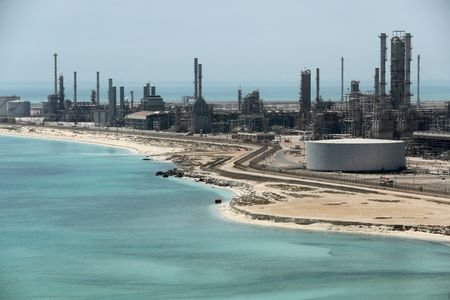
Saudi Aramco resumed crude loadings at its Ras Tanura terminal in the Gulf, the world's biggest oil port, after a nearly four-month halt, shipping data showed.
Fertilizer shipments through the strait have also picked up, helping to assuage concerns about a spike in global food prices.
U.S. Secretary of State Marco Rubio — wrapping up a tour of the Gulf to reassure regional allies about the interim pact — issued a joint statement with the Gulf Cooperation Council calling for "free, unconditional, and unrestricted navigation" in the strait without tolls or "attempts to assert control".
Iran's foreign ministry said the strait should be governed by Iran and Oman, while Ali Akbar Velayati, top adviser to Iran's supreme leader, warned Washington's Gulf allies their survival depended on Tehran's tolerance.
(Reporting by Reuters bureaus; Writing by Andy Sullivan, Gareth Jones and Philippa Fletcher; Editing by Aidan Lewis, Timothy Heritage and Sanjeev Miglani)