By Sarah Kinosian, Vivian Sequera and Julia Symmes Cobb
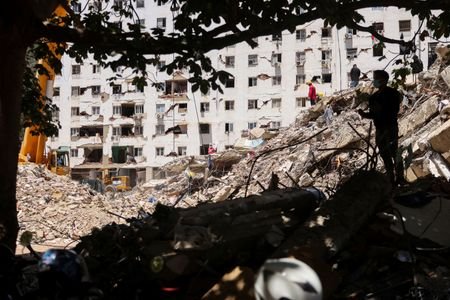
CATIA LA MAR/BOGOTA, July 7 (Reuters) - At the La Esperanza cemetery in western Venezuela, local volunteers have been digging graves for victims of the country's devastating twin earthquakes last month, unloading coffins and helping families search for loved ones.
In the hills above the hard-hit town of Catia la Mar, local volunteers working alongside some cemetery workers have buried 314 people at La Esperanza cemetery, community council head Elis Zabala, 33, said on Tuesday.
About 100 of the people who were buried are identified only by a number linked to morgue records.
"We put our heart and soul into it, but I feel tired," said Zabala, adding that the volunteers are exhausted. Many in the community also need aid like fuel, medicine, water and food.
The volunteers are performing jobs often handled by government teams in other countries. Venezuelans have criticized the government's response to the two earthquakes on June 24 as slow and say it remains ineffectual nearly two weeks on.
U.S. DIPLOMAT DEFENDS RESPONSE
The top U.S. diplomat in Caracas said on Tuesday that Venezuela has complied with requests to advance the humanitarian response, not directly addressing criticism of the government put in place after Washington's ouster of former President Nicolas Maduro.
Acting President Delcy Rodriguez, who had been Maduro's vice president, has vehemently defended the government's handling of the quakes. Rodriguez has said there is a media conspiracy to discredit the official response, though she provided no evidence for her accusation.
"The interim government, as I have said, has been fully compliant in terms of requests to advance this massive humanitarian response," U.S. Chargé d'Affaires John Barrett said in a call with journalists when asked about the criticism of the government's disaster response and his previous praise for Rodriguez.
Barrett, who told media last week that he had “a great deal of confidence” in local authorities, said that total humanitarian assistance from the United States for the quakes now exceeds $310 million. Venezuela's response capacity has been sapped by decades of economic and political turmoil, political analysts have said.
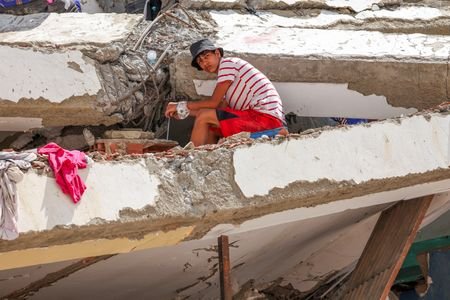
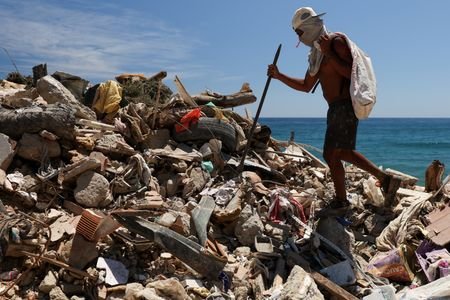
The earthquakes' death toll rose to 3,685, authorities said on Tuesday, while nearly 18,000 people remain homeless after the two quakes, which measured magnitudes 7.2 and 7.5 and struck within seconds of each other.
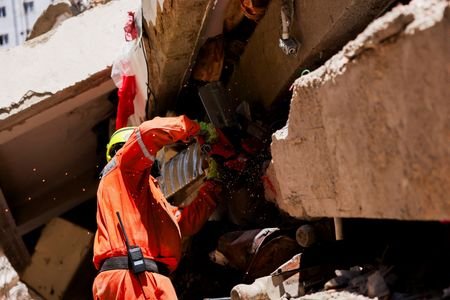
Civilians have led many of the rescue and recovery operations on the ground, with the help of professional rescue teams from around the world, firefighters and volunteers from the army.
Civilians also provided much of the in-kind aid such as food and clothing in the initial days after the quakes, especially in the hardest-hit state of La Guaira. Global humanitarian organizations including the International Rescue Committee have said the response has not met the scale of humanitarian need.
POLICE BLOCK JOURNALISTS AT CEMETERY
At the cemetery on Tuesday, about 20 police officers blocked journalists' access. Zabala said volunteers from the area began digging trenches at burial sites the day after the earthquakes.
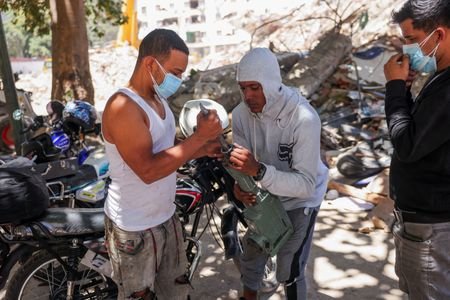
Although the area was not directly damaged by the earthquakes, it is remote, and there is no public transportation. Only motorcycles are traveling up and down the steep hillside, which has views of the blue Caribbean Sea.
For victims' families, the services, from the coffin to the placement of a cross on top, are free, Zabala said.
Family members who go to the local temporary morgue at La Guaira's port to search for relatives look at photos in hopes of identifying victims.
Distinguishing marks, fingerprints and dental records are also used, said a forensic technician, who declined to be identified because he was not authorized to speak to media.
If the visual and dental records do not lead to a full identification, DNA tests are done, he added.
(Reporting by Vivian Sequera and Sarah Kinosian in Catia La Mar and Julia Symmes Cobb in Bogota; Editing by Cynthia Osterman and Matthew Lewis)