By Colleen Goko
JOHANNESBURG, April 8 (Retuers) - Wealthy nations slashed their development aid in 2025, probably by record-breaking amounts, a debt group said, ahead of data set to be released on Thursday by the Paris-based Organisation for Economic Cooperation and Development.
The deep cuts, for a second consecutive year, are expected to reduce the total amount of official development aid globally to around $170-$190 billion - levels last seen during the COVID pandemic in 2020-21, the European Network on Debt and Development (Eurodad) said at a briefing on Wednesday.
Those estimates compare with total official development aid of $223.7 billion in 2023 and $212.1 billion in 2024.
The decline contrasts sharply with defence spending, which stood at $1.4 trillion in 2025 across the 32 member states of the NATO military alliance, which comprises the United States, most European nations and Canada.
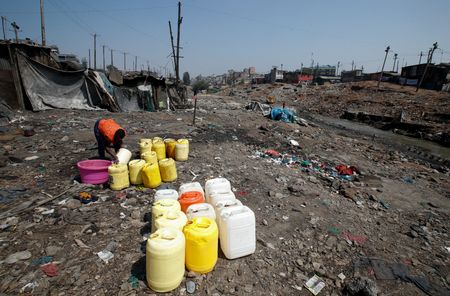
The closure of the U.S. Agency for International Development last year and a drop in allocations from other developed countries have already hit developing economies, especially in Africa.
"The least developed countries and sub-Saharan Africa are expected to face disproportionate impacts, with official development assistance cuts ranging from 13% to 28%," said Matthew Simons, senior policy and advocacy officer at Eurodad.
'BLANK CHEQUE FOR WAR'
Maria Jose Romero, Eurodad's policy and advocacy manager, said the reductions in aid were undermining decades of development progress.
"Rich countries are writing a blank check for war while abandoning their long-standing commitment to deliver 0.7% of gross national income as development assistance," she said.
The North Atlantic Treaty Organisation says all its 32 members are projected to have met the alliance's spending target of 2% of national output in 2025.
However, only three of the 34 members and associates of the OECD's Development Assistance Committee - a grouping of main bilateral aid donors - are expected to meet the 0.7% benchmark for development aid. Eurodad did not identify the three nations.
The committee's ongoing self-review has raised concerns over legitimacy, with critics noting that decision-making remains concentrated among wealthy donor nations.
Meetings of the World Bank and International Monetary Fund next week are expected to focus on how multilateral institutions can fill the gap left by declining bilateral aid, Eurodad said.
(Reporting by Colleen GokoEditing by Gareth Jones)