By Ahmed Aboulenein and Yasmeen Abutaleb
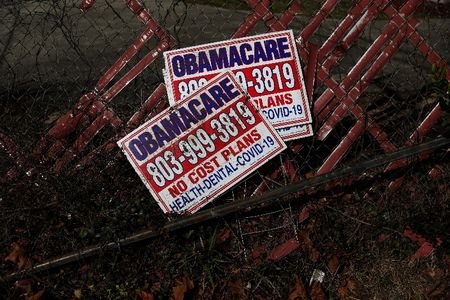
WASHINGTON, Sept 10 (Reuters) - The White House said on Thursday it will send $500 to nearly one million Americans in 30 states who are enrolled in Obamacare health insurance plans, payments it described as refunds for overcharges.
It said "user fees" passed on to consumers in the form of higher premiums by the administration of President Joe Biden were in excess of what was needed to run the federal exchange, or Healthcare.gov.
Obamacare plans, created by Democratic President Barack Obama's signature Affordable Care Act, offer subsidies based on income. Republican President Donald Trump sought unsuccessfully in his first term to overturn the law and has proposed changes that would make the plans less comprehensive.
Millions of people dropped coverage this year as rising medical costs and the expiration of extra COVID-era subsidies made monthly premiums unaffordable. People on the higher end of the income scale who lost those subsidies were among the hardest hit.
The White House said checks to eligible Americans will begin going out in October.
Health insurers who offer plans under the ACA on Healthcare.gov pay the government a user fee to sell plans on the federal exchange, set annually by the Centers for Medicare & Medicaid Services as a percentage of premiums.
According to a White House official, the $500 refund will primarily go to people earning more than 400% of the federal poverty level who do not qualify for subsidies, as well as those earning between 100% and 400% who did not receive subsidies. The administration has already identified eligible recipients, it said.
The official confirmed that these payments are unrelated to the $5,000 payment Trump announced on Wednesday night should his Republican party retain control of Congress in November's midterm elections.
The U.S. Department of Health and Human Services did not immediately respond to a request for comment.
The states involved in the payments, most of which are Republican-led, are Alabama, Alaska, Arizona, Arkansas, Delaware, Florida, Hawaii, Indiana, Iowa, Kansas, Louisiana, Michigan, Mississippi, Missouri, Montana, Nebraska, New Hampshire, North Carolina, North Dakota, Ohio, Oklahoma, Oregon, South Carolina, South Dakota, Tennessee, Texas, Utah, West Virginia, Wisconsin and Wyoming.
USER FEES
The user fees help pay for the Healthcare.gov website, its call center and grants to "navigator" groups that assist people in enrolling in the plans, said Cynthia Cox, director of the ACA program at KFF, a health policy research group.
The fee is set roughly a year in advance. The 1.5% rate for 2025 and the 2.5% rate for the current 2026 plan year were both finalized by the Biden administration, which projected higher fees to offset an expected enrollment drop when the COVID subsidies expired.
The Trump administration's first payment rule, issued in May, cut the fee to 1.9% for 2027.
Insurers build the fee into premiums, so consumers do not see it as a separate charge. A surplus does not mean consumers were overcharged, Cox said, attributing it largely to the current administration's decision to cut spending on programs like the navigators while continuing to collect the fee.
The rationale for limiting refunds to unsubsidized enrollees is that subsidized enrollees have their payments capped as a share of income, Cox explained, so higher premiums are largely absorbed by the government.
Cox said she knew of no precedent for refunding user fees to consumers, though the government issues other rebates regularly.
(Additional reporting by Susan Heavey and Daphne Psaledakis in Washington and Sriparna Roy in Bengaluru; Editing by Caroline Humer and Bill Berkrot)