By Krishna N. Das and Ruma Paul
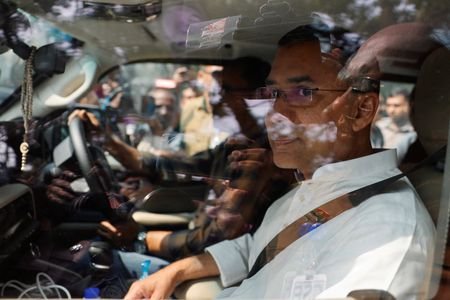
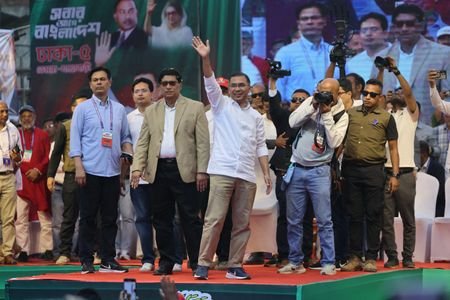
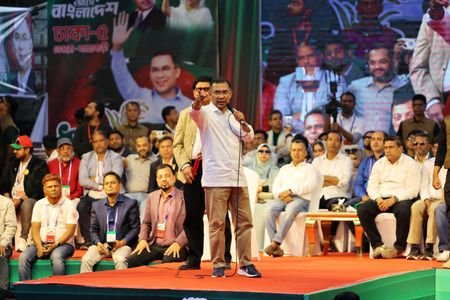
DHAKA, Feb 13 (Reuters) - Less than two months after returning from nearly two decades of self‑imposed exile in London, Tarique Rahman is set to win one of Bangladesh's most pivotal elections and become prime minister, leading the country as his parents once did.
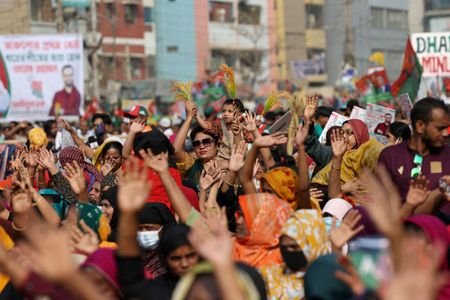
A coalition led by his Bangladesh Nationalist Party (BNP) crossed the halfway mark in the parliamentary election in counting early on Friday, local media house Ekattor TV said.
Thursday's election marked a remarkable reversal of fortune for the soft‑spoken 60‑year‑old, who left the country in 2008 saying he needed medical treatment after his release from detention under a military‑backed caretaker administration. He had been held after a crackdown on corruption.
He returned home to a hero's welcome last Christmas after a youth‑driven uprising uprooted the BNP's arch‑enemy, long‑time premier Sheikh Hasina of the Awami League, in August 2024.
Hasina, now in exile in New Delhi, and Rahman's mother, Khaleda Zia, long dominated Bangladeshi politics, while Rahman's father was a leading Bangladesh independence figure who ruled the country from 1977 to 1981 before he was assassinated.
Rahman has pledged to recalibrate Bangladesh’s international partnerships to attract investment without tying the country too closely to any single power, in contrast with Hasina, who was seen as aligned with New Delhi.
He has also highlighted expanding financial aid for poor families, reducing reliance on garment exports by promoting industries such as toys and leather goods, and introducing a two‑term, 10‑year limit for prime ministers to deter autocratic tendencies.
Events have unfolded so quickly since Rahman landed in Dhaka with his cardiologist wife and barrister daughter that he said he has scarcely had time to reflect.
"I don't know how we have passed every minute since we landed," Rahman said on the sidelines of an interview last Saturday with Reuters in his party office, flanked by his daughter Zaima.
IMAGE MAKEOVER
The bespectacled Rahman was born on November 20, 1965, in Dhaka to Khaleda and former President Ziaur Rahman, the founder of the BNP. He studied international relations at the University of Dhaka, dropped out, and later started businesses in textiles and agro‑products.
Since his return, Rahman has tried to project himself as a statesman ready to look beyond his family's difficulties under Hasina. Gone is the image of a brash operator from the BNP’s 2001–2006 era, when his mother was prime minister. Although he never held a government post, Rahman was often accused of running a parallel power centre during her tenure, a charge he denies.
"What does revenge bring to someone? People have to flee from this country because of revenge. This does not bring anything good," he said. "What we need at the moment in the country is peace and stability."
Under Hasina’s rule, Rahman became a central target of corruption cases and was convicted in absentia in several of them. In 2018, he was also sentenced to life over a 2004 grenade attack on a rally Hasina was addressing that killed and wounded many. He has always denied the allegations, calling them politically motivated, and has since been acquitted in all cases following Hasina’s ouster.
From London, he had watched his party marginalised election after election, with senior leaders jailed, workers disappearing, and offices shuttered.
Since returning, Rahman has adopted a noticeably understated style, avoiding inflammatory rhetoric and calling instead for restraint and reconciliation. He has spoken of restoring “people’s ownership of the state” and rebuilding institutions — a message that has energised BNP supporters eager for a fresh start. Further helping to soften his image, the family's fluffy Siberian cat Jebu has gone viral on social media.
"She's 7. She's half Siberian. We adopted her," Rahman's daughter Zaima told Reuters.
Inside the BNP, Rahman's grip on the party is strong. Party insiders said he directly oversaw candidate selection, strategy and alliance talks, roles he once performed remotely.
He may be a product of dynastic politics, but Rahman said restoring and sustaining democracy would be his biggest priority.
"Only by practicing democracy can we prosper and rebuild our country. If we practice democracy, we can establish accountability," he said. "So we want to practice democracy, we want to rebuild our country."
(Reporting by Krishna N. Das and Ruma Paul in Dhaka; Editing by Lincoln Feast and Nick Zieminski)