By Marta Nogueira
RIO DE JANEIRO, June 22 (Reuters) - The European Union is turning to Brazil as a strategic partner in its push to diversify its critical mineral supplies, offering a deal that it says will be beneficial to Brazil's development goals, EU Commissioner for International Partnerships Jozef Sikela told Reuters on Saturday.
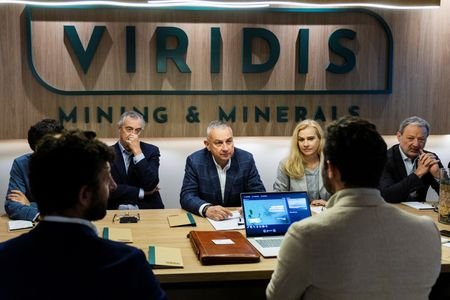
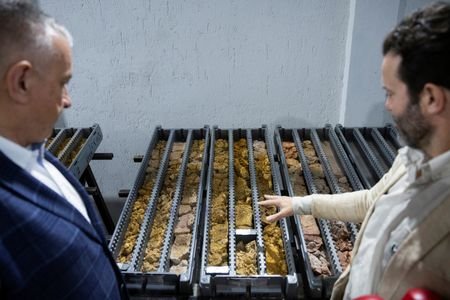
The commissioner visited the rare earth research and processing center of Australian mining company Viridis Mining and Minerals, in Poços de Caldas, in the southeastern state of Minas Gerais, one of four priority projects selected to accelerate collaboration between the EU and Brazil.
Sikela said the European approach emphasizes sustainable business and local rare earth processing, aligning with Brazil's push to export higher-value processed minerals instead of raw materials from a sector in which it holds the world's second-largest critical mineral reserves.
"What is extremely important is that also Brazil moves from the like a low-margin business so basically that the value is created here in the country," the commissioner said in an interview during his visit to the Viridis facility, highlighting that Brazil is currently the EU's most strategic partner in Latin America and a growing economy.
Sikela said the partnership would allow the EU to secure supplies through purchase agreements while helping Brazil build refining capacity, access new technologies and move up the supply chain into higher-margin production.
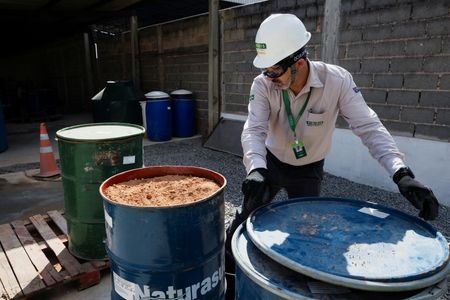
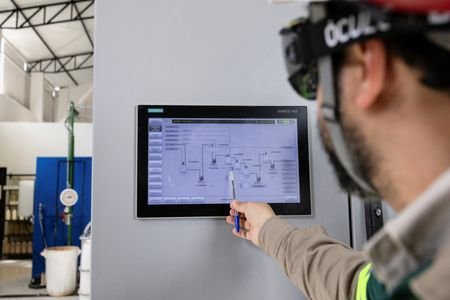
Viridis' pilot mining project in Minas Gerais, inaugurated in May, can process 100 kilograms of ore per hour and produce up to 2.92 kg of mixed rare earth carbonate (MREC) annually.
Viridis plans to invest $360 million in a commercial plant capable of producing 15,000 tons of MREC per year from 2028, spanning 228.62 km² of licenses in Minas Gerais.
"And that is why I like this particular project (Viridis) so much, because it basically delivers on objectives: it creates jobs, creates new partnerships, brings new technologies, education and knowledge transfer, all based on the most advanced environmental, social and technical standards," Sikela said.
DEAL IN SIGHT
Sikela also noted a non-binding letter of intent signed this month between Viridis and Belgian chemicals company Solvay for the supply of MREC, which could evolve into a broader partnership that would include technological processing support.
Viridis CEO Rafael Moreno told Reuters that talks with the EU are at an advanced stage, with a Solvay deal potentially finalized by the end of July.
Viridis' progress in Brazil comes amid a global race for rare earths and critical minerals, as Europe and the U.S. seek to reduce their dependence on China — the largest producer — for materials vital to electric vehicles and defense systems.
When asked about the landscape, Sikela said the European strategy aims to reduce "dependencies" across global supply chains, following shocks such as the pandemic and the war in Ukraine, stressing the issue extends beyond China alone.
He added that the EU considers projects involving other critical minerals in Brazil, such as nickel and lithium, as priorities, and indicated plans to advance a memorandum of understanding with the Brazilian government, though details remain under negotiation.
Asked whether the EU was late to the competition for assets in Brazil, Sikela argued that "our value proposition is more beneficial than what these others want," citing sustainability, job creation and education as key differentiators.
Moreno said the company is aligned with European guidelines on diversifying the rare earth supply chain, favoring an approach open to partners across multiple regions.
At the end of last month, he told Reuters that Viridis was in advanced negotiations with potential buyers in Europe and the U.S.
(Reporting by Marta Nogueira; Editing by Aurora Ellis)