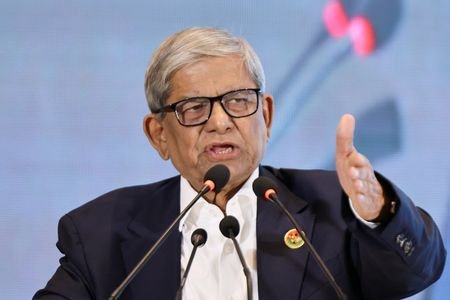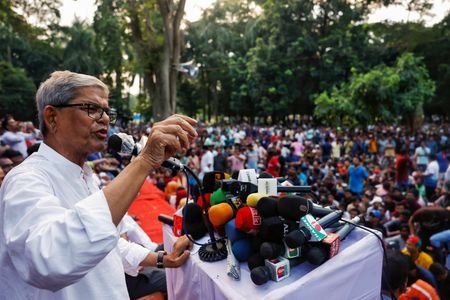
DHAKA, Aug 20 (Reuters) - Bangladeshi lawmakers elected veteran Bangladesh Nationalist Party leader Mirza Fakhrul Islam Alamgir as the country's new president on Thursday, making the longtime opposition figure the head of state after his party came to power in a major political transition.
The BNP returned to power in February in the long wake of the fall of Sheikh Hasina's Awami League government in 2024. While the presidency is largely ceremonial, Alamgir will serve as head of state and commander-in-chief of the armed forces. Executive authority remains with the prime minister and cabinet in the South Asian nation of about 173 million people.
Alamgir, 78, defeated Oli Ahmed, a retired army colonel and chairman of the Liberal Democratic Party and candidate of the Jamaat-e-Islami-led 11-party opposition alliance, in a parliamentary vote.
Chief Election Commissioner A.M.M. Nasir Uddin declared Alamgir the winner after the 255-to-88 vote.
The BNP and its allies hold a two-thirds majority in parliament after winning the February 12 general election, which returned the party to power after years in opposition and brought Tarique Rahman to the office of prime minister.
The resignation last month of Mohammed Shahabuddin on health grounds before the end of his five-year term triggered the presidential election. A former Awami League politician and close confidant of Hasina, Shahabuddin was elected president in 2023 when her party was at the height of its power.
Hasina has been living in India since fleeing Bangladesh after a mass uprising ousted her government in August 2024 and has said that she intends to return in December this year.
One of the BNP's longest-serving leaders, Alamgir served as the party's secretary-general from 2016 until his nomination for the presidency. During Hasina's rule, he became one of the opposition's most prominent voices and faced repeated arrests and a series of legal cases.
Alamgir began his career as a teacher after studying economics at the University of Dhaka. He joined the BNP in the early 1990s and rose steadily through the party ranks to become one of its best-known national leaders.
Over the course of his political career, he held several ministerial posts, most recently serving as local government minister before stepping down following his nomination for the presidency.
He is expected to be sworn in on Friday evening.
(Reporting by Ruma Paul; Editing by YP Rajesh and Hugh Lawson)