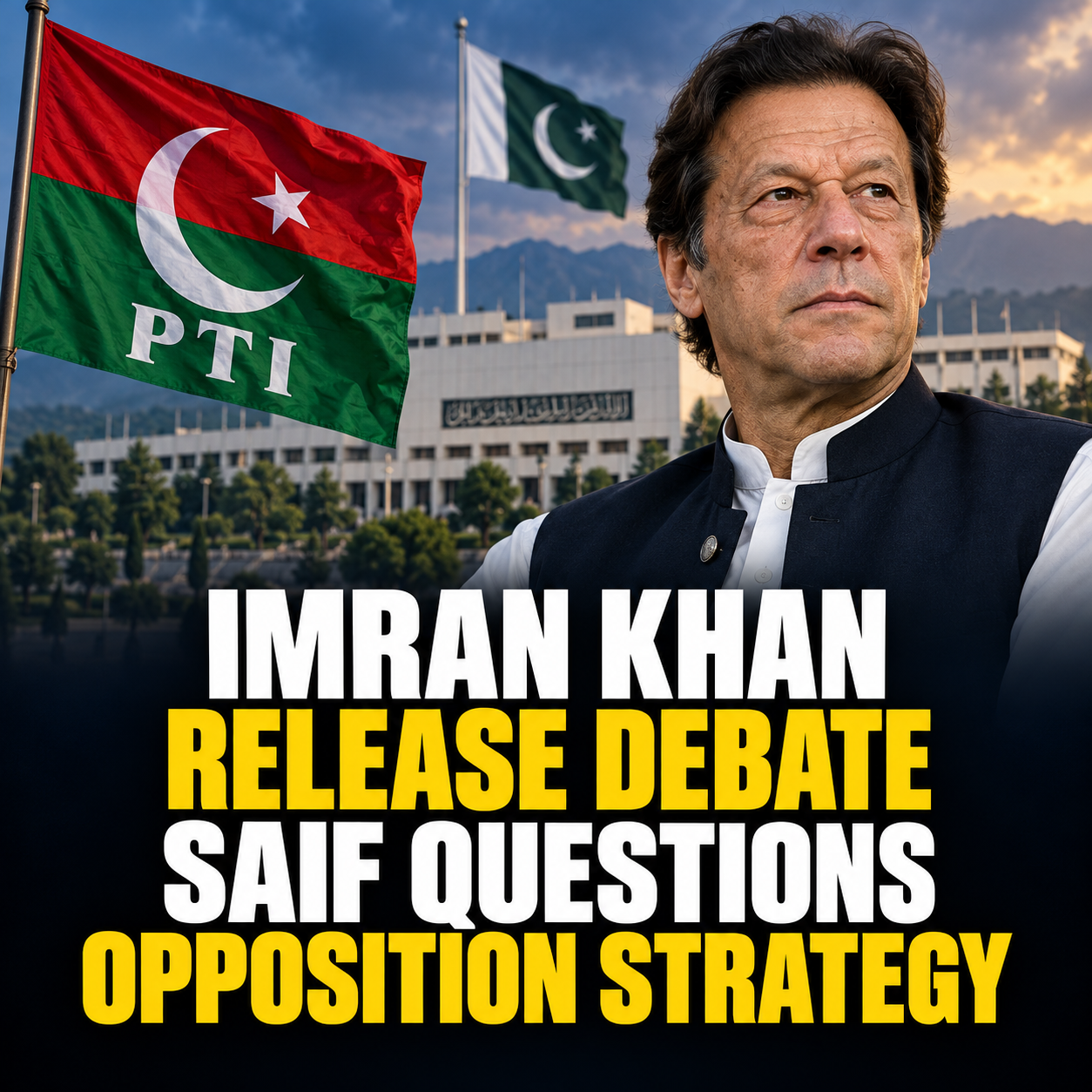
Barrister Muhammad Ali Saif’s criticism has renewed attention on the opposition’s approach to securing Imran Khan’s release. Earlier reporting provides context about negotiations, consultation with Khan and the dispute over meeting venues.
The Imran Khan release debate has moved back into focus after Pakistan Tehreek-e-Insaf (PTI) leader Barrister Muhammad Ali Saif questioned efforts to secure the jailed former prime minister’s freedom. The News reported his criticism of opposition leaders Mahmood Khan Achakzai and Allama Raja Nasir Abbas on 2 November, citing remarks on Geo News programme Jirga. [1]
Saif alleged that Senate Opposition Leader Abbas’s contacts with influential establishment figures were not directed towards securing Khan’s freedom. He also criticised National Assembly Opposition Leader Achakzai over what he described as an unwillingness to meet Prime Minister Shehbaz Sharif for negotiations on Khan’s behalf. Those are Saif’s claims, rather than independently established findings about the leaders’ intentions. [1]
What the Imran Khan release dispute is about
The immediate disagreement concerns the opposition’s method: who should engage with the government, on what terms and with whose authority. Saif’s intervention puts pressure on the leaders involved to explain their approach, but it does not itself announce a new negotiating round or an agreement to release the PTI founder.
The accounts reviewed for this article do not include fresh replies from Achakzai or Abbas to these remarks. Their previously reported positions are relevant context, while remaining separate from a direct response to Saif’s allegations.
Why earlier government and PTI talks stalled
Reporting from 3 October shows that the differences extended beyond whether opposition figures were willing to attend a meeting. Geo News described a deadlock over access to Khan and consultation with him before a final decision could be made. The discussions took place ahead of the party’s planned protest march. [2]
The Express Tribune’s report from the same period quoted PTI lawmaker Asad Qaiser saying the opposition’s primary demand was a meeting with Khan. He also referred to concerns involving Khan’s sisters and other demands. The account helps explain why participation in talks and authority to approve an agreement became linked issues. [3]
The dispute over a neutral meeting venue
On 22 October, Geo News reported that Parliamentary Affairs Minister Tariq Fazal Chaudhry said the prime minister was ready to meet Achakzai on matters of national interest. The minister argued that the agenda was more important than the location. [4]
The same report recorded the opposition alliance’s proposal to use Parliament’s Constitution Room. Achakzai had said he would participate at a neutral venue, after declining talks in the National Assembly speaker’s chamber. That earlier position provides context for Saif’s criticism; it should not be treated as a new response to his interview. [4]
What happens next
The next substantive developments would be an agreed meeting, a publicly stated negotiating agenda or a concrete legal decision affecting Khan’s custody. Claims that someone has political contacts do not, on their own, show that the parties have settled the terms of negotiations.
Impact and conclusion
Public criticism among opposition figures could complicate coordination if it weakens agreement over who speaks for the campaign. It could also prompt leaders to clarify their responsibilities and negotiating conditions. Which outcome follows depends on how the participants respond, rather than the strength of any single accusation.
The wider significance is whether the opposition can turn demands for Khan’s release into a coherent process with clear authority and measurable steps. For supporters and the public, progress would be reflected in verifiable meetings, decisions and outcomes. Saif’s remarks have renewed the debate, but the reporting reviewed here does not establish a release agreement or a change in Khan’s legal position.
Sources and references
[1] The News — Saif criticises opposition leaders, 2 November 2026
[2] Geo News — government and PTI talks, 3 October 2026
[3] The Express Tribune — earlier negotiation demands, 3 October 2026
[4] Geo News — government and opposition venue positions, 22 October 2026