By Dmitry Vasiliev and Alessandra Prentice
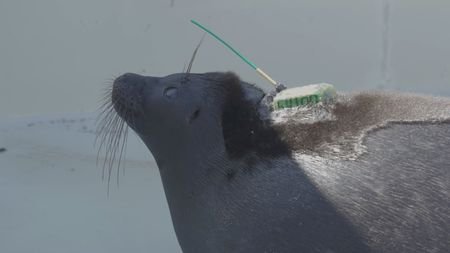
REPINO, Russia, Nov 17 (Reuters) - You could follow Kroshik the rescue seal with little dots on a map. There he was: hunting for fish on the dangerous southern shore of Lake Ladoga, then swimming back to safer waters. Then suddenly, he was gone.
"We will know nothing more of Kroshik’s adventures," conservationist Vyacheslav Alexeyev wrote last week on the social media feed where he had been sharing the seal's whereabouts with thousands of fans. Hundreds of commenters responded with crying emojis and broken hearts.
This month, Russian researchers were cut off from the main satellite system they have used for years to track wildlife across some of the world's largest wildernesses, in the latest example of Moscow's scientific isolation due to sanctions and war.
The Argos system, run by French firm CLS, has been used to track rare migratory birds across Russia's Far East, wild reindeer in northern forests, bearded seals in the White Sea and Atlantic walruses around Franz Josef Land.
A CLS spokeswoman confirmed the suspension of services to Russian clients, due to "the evolving international context and the arising constraints".
Fans of Kroshik, or Little Crumb, had been following the playful freshwater ringed seal's movements across Lake Ladoga in northern Russia, thanks to updates pinged via satellite from a transmitter glued to his fur. He had gained fame for repeatedly returning to his carers after failed releases, before making it back to the wild in September.
"All of that will now have to be stopped, so our feelings about it are extremely negative," Alexeyev, who runs a shelter near St Petersburg that rescued Kroshik as a pup, cared for him for a decade and released him this year, told Reuters.
UNRAVELLING OF COOPERATION
The satellite cut-off adds to an unravelling of decades of scientific cooperation between Russia and the West since Moscow's launch of its full-scale war in Ukraine in 2022.
Since then, partnerships with institutions such as the European Space Agency and the European Organization for Nuclear Research (CERN) have ended, while joint Arctic research has been curtailed.
Losing access to Argos for Russian researchers "is really going to lead to lacking information on priority species and conservation and management actions," said Philipp Maleko, a PhD candidate at the University of Wisconsin-Madison, who has used it to study endangered shorebirds that fly between Russia's Far East and Southeast Asia, such as the spotted greenshank.
"So many birds depend on Russia's Arctic boreal ecosystems for reproducing, for really sustaining viable populations," he told Reuters.
Russia's Lake Baikal Foundation, a conservation group dedicated to the huge Siberian lake that holds nearly a quarter of the world's unfrozen fresh surface water, warned in October that losing the data threatened wildlife research across Russia.
The suspension would disrupt programmes monitoring Baikal’s endemic seal and a tiny population of endangered forest reindeer, its head was quoted as saying by news agency TASS.
Researchers say no other available system is quite as useful as Argos at tracking how animals move across Russia's far-flung regions, away from cellphone towers and human settlements.
CLS did not say how many users it had in Russia, but its website says it was nearly the only system used by Russian scientists to study marine and terrestrial wildlife migration in northern regions.
In October, Russia's state-run Agency for Strategic Initiatives said it was in talks to develop a Russian alternative.
At the St Petersburg shelter a plump, velvety seal glided past Alexeyev by the outdoor pool. Alexeyev said he did not think Argos could be replicated: "It is the only satellite constellation of its kind."
He was grateful the company had worked with Russia as long as it did, "despite all the difficulties and the generally hostile attitude towards us in Europe."
(Writing by Alessandra PrenticeEditing by Peter Graff)