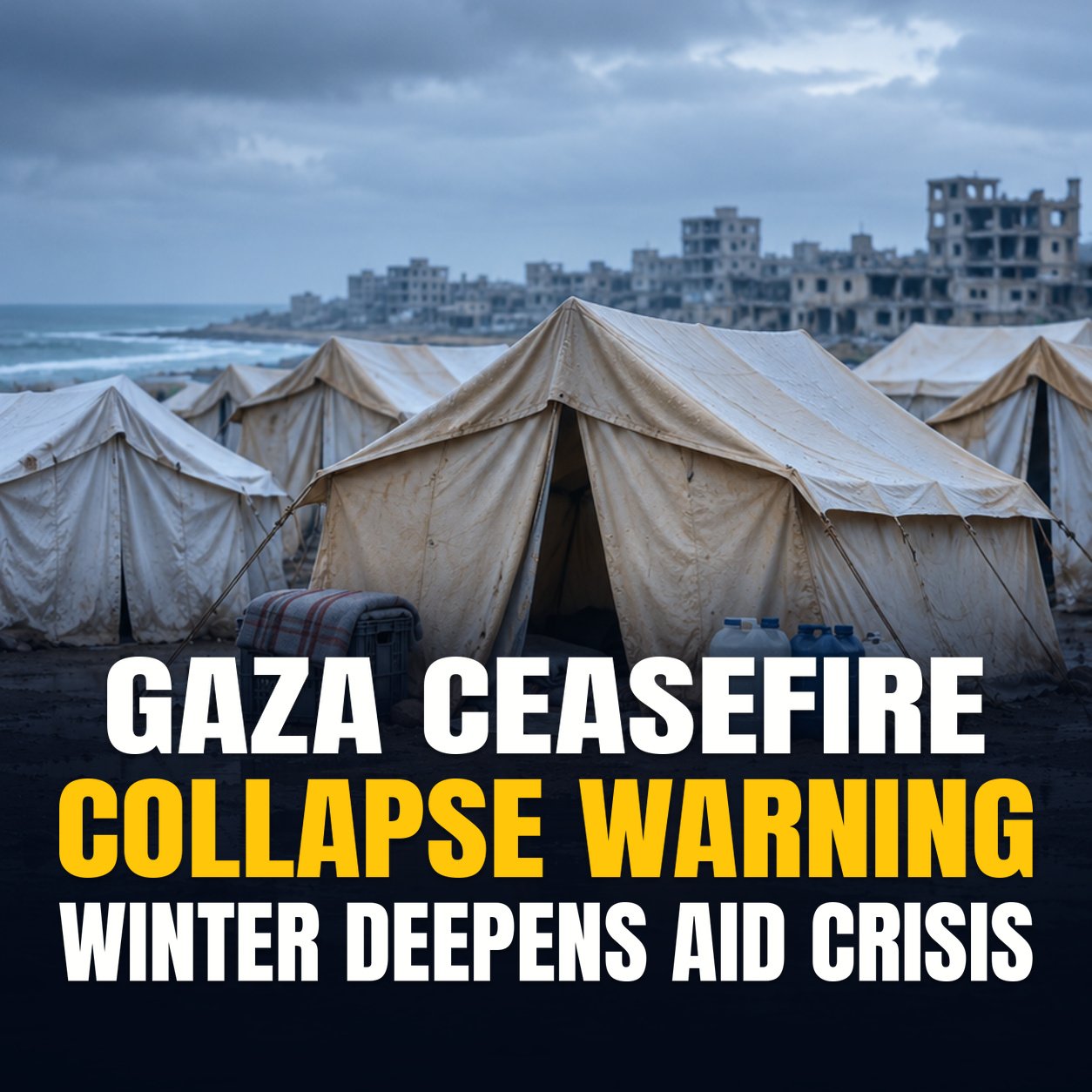
A warning over implementation of the truce comes as relief agencies seek more shelter supplies and funding for displaced families.
The body overseeing Gaza’s US-brokered ceasefire has warned the agreement could fail without action on its commitments. The Board of Peace’s report to the UN Security Council, reported by Associated Press on 17 November, comes as winter puts further pressure on displaced families.
Why the ceasefire is under scrutiny
The board called for both parties to honour the agreement and sought faster admission of shelter materials. Its report warns of possible failure; it does not announce that the truce has ended.
What winter means for families in Gaza
In a joint statement on 17 November, the World Food Programme and the International Organization for Migration said more than 1.7 million people remained displaced, while 1.98 million needed shelter assistance. These figures measure different needs and should not be added together.
The agencies said recent gains in food security depended heavily on humanitarian assistance. Bad weather could reverse that progress by damaging shelters and household food stocks. Funding shortages have already forced reductions in food support.
Their statement reported damage or destruction to at least 40,000 additional shelters since early November. More than half of Gaza’s 1,700 displacement sites are in areas prone to flooding. Tents, blankets and repair materials are needed alongside work to improve drainage and camp access.
Aid access and Israel’s response
Reuters reported that IOM was seeking more funding and shelter supplies amid concern about deaths from exposure to cold. The agency said around 100,000 tents were waiting to enter Gaza and cited crossing closures and lengthy Israeli security checks as obstacles.
COGAT, the Israeli military agency coordinating aid, said it had a winter-preparation plan and that supplies and medicines continued to enter Gaza. The issue is therefore not simply whether any deliveries are happening, but whether enough suitable supplies can reach families in time.
Why recovery needs more than emergency deliveries
An earlier UN Special Coordinator report, published in September, linked Gaza’s recovery to the wider political process. It said implementation of the Security Council’s framework remained incomplete and warned that essential supplies and services were still severely constrained.
That provides context for the latest warnings: emergency aid can meet immediate needs, but a reliable system for recovery also needs access, coordination and functioning institutions. A family whose tent has flooded needs a replacement now; making its next shelter more resilient requires a longer-term response.
What to watch next
The practical questions are whether shelter materials and equipment are cleared for entry, whether funding supports sustained deliveries, and whether aid teams can reach and repair vulnerable sites. Those are clearer measures of progress than the announcement of a plan alone.
Relief agencies’ assessments and the authorities’ delivery figures will need to be read together. Aid entering the territory and aid reaching the people who need it are distinct stages.
Impact and conclusion
For displaced families, the ceasefire’s value is tied to daily safety and access to food, shelter and essential services. Continued delays would leave them more exposed through winter. Faster delivery of suitable supplies, repairs to vulnerable sites and progress on the agreement’s commitments are the immediate tests of whether the warnings lead to change.
Sources
Associated Press, 17 November — Board of Peace warns of ceasefire collapse
WFP and IOM, 17 November — Food and shelter needs through winter
Reuters, 17 November — IOM warning and COGAT’s response
UN Special Coordinator, 24 September — Gaza recovery and implementation