By Andrew Gray and Bart H. Meijer
BRUSSELS, Nov 18 (Reuters) - The European Commission on Wednesday proposed a new €45 billion ($49.5 billion) loan to Ukraine to help fill a funding gap of €70 billion for next year as Kyiv continues its fight against Russia's 2022 invasion.
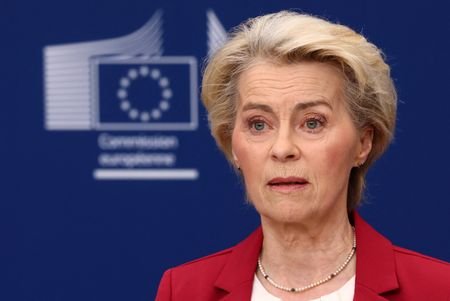
European Commission President Ursula von der Leyen said Ukraine would only need to repay the loan after Russia had paid reparations for damage caused by the war.
The planned measure, which requires approval from EU member countries, would come on top of a similar loan of €90 billion to Ukraine agreed by EU leaders at the end of last year to fund Ukraine in 2026 and 2027.
"Five years since the start of this war of aggression, Europe stands united," von der Leyen told reporters in Brussels. "We are as committed as ever to support Ukraine in war and in peace."
Kyiv's other international partners would be expected to provide the rest of the money to fill next year's funding gap, von der Leyen said.
The Commission, the executive body of the 27-nation European Union, proposed that to up to €25 billion from the new loan could be spent on military aid and up to €20 billion on general budget support.
To finance the loan, the European Commission would borrow on behalf of the EU on international markets, officials said.
INTENSIFIED RUSSIAN ATTACKS MEAN UKRAINE NEEDS MORE CASH, COMMISSION SAYS
European Economy Commissioner Valdis Dombrovskis said Ukraine needed additional support because Russia is intensifying attacks on critical infrastructure and disrupting trade, particularly by blocking Black Sea export routes.
"For almost five years, Ukraine has stood guard against the Russian aggression that also threatens our citizens, our territory, and our way of life. Our support gives Ukraine a crucial strategic partner," he said.
Von der Leyen said she was confident all EU members would back the new loan, even though three - Hungary, the Czech Republic and Slovakia - opted out of the last one.
She said even EU countries that did not favour giving military aid to Ukraine were still committed to supporting Kyiv more generally, so their support for the loan could be attributed to meeting civilian needs.
($1 = 0.9101 euros)
(Reporting by Bart Meijer and Andrew Gray; Additional reporting by Philip Blenkinsop)