Gaza’s ceasefire is facing renewed pressure after local medics reported at least 10 deaths in Israeli attacks on Thursday, 26 November. Hamas leader Khalil Al-Hayya said the group would discuss its response with other Palestinian factions, Reuters reported. [1]
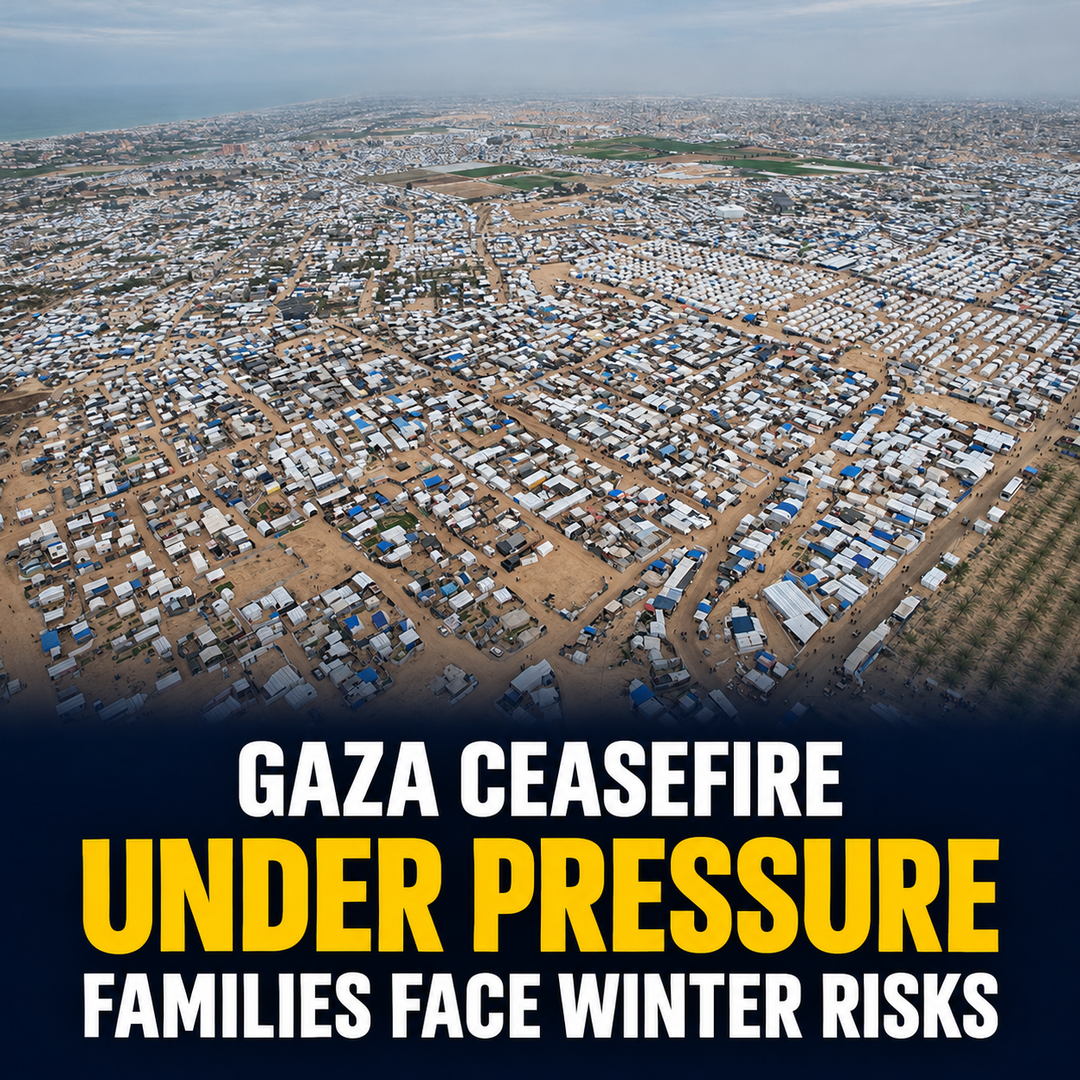
The developments come as humanitarian agencies describe a population struggling with damaged shelters, flooding and restricted access to supplies. For displaced families, the immediate concerns are protection from violence, a dry place to sleep and reliable access to essential assistance. [2]
The latest strikes and disputed claims
Those killed included Hamas official and deputy education minister Khaled Abu Nada. Israel said he managed funding for militants; Hamas confirmed his death and called the attacks ceasefire violations. No specific retaliatory operation was announced. [1]
Why winter makes the humanitarian situation harder
In its report dated 18 November and published on 20 November, the UN humanitarian office OCHA said early seasonal rains had damaged shelters and essential facilities. Its account covered an earlier reporting period and provides context for the winter emergency. [2]
Preliminary assessments cited by OCHA suggested that around 46,000 households may have been affected by rainfall on 6–8 November. More than 5,000 households were reportedly sleeping without shelter. These are dated assessments, rather than a new count of people affected this week. [2]
OCHA also described shortages of pumps, generators and suitable shelter materials, alongside funding and access constraints. Flooded roads and damaged sanitation can interrupt assistance and make daily life especially difficult for children, older people and people with disabilities. [2]
Aid access is the practical test
The Humanitarian Country Team’s 13 November appeal said more than 150,000 procured tents were waiting outside Gaza. It called for faster entry of winter supplies, sufficient funding and access to safer locations. The figure describes the position at that appeal’s date. [3]
The European Union likewise called on 14 November for sustained humanitarian access, protection of civilians and full implementation of aid commitments. Its statement stressed that assistance should reach peaceful purposes and not be diverted by armed groups. [4]
A UN account published on 26 November also highlighted the burden on widowed mothers living in displacement camps: finding shelter, collecting water, earning an income and keeping children in education. It illustrates how the emergency extends beyond the immediate aftermath of a strike. [5]
Impact and conclusion
A durable ceasefire needs to produce safety and workable living conditions. Further escalation could interrupt relief and compound the risks posed by winter. The measures that matter most to families are fewer attacks, dependable aid deliveries, adequate shelter and functioning basic services. Diplomatic progress will be meaningful when those improvements become part of daily life.
Sources and references
[1] Reuters. Hamas weighs response after Israel kills 10 people in Gaza. 26 November 2026. Source link
[2] UN OCHA, occupied Palestinian territory. Humanitarian Situation Report | 18 November 2026. Published 20 November 2026. Source link
[3] Humanitarian Country Team / UN OCHA. Urgent appeal to expedite the entry of winter supplies into Gaza. 13 November 2026. Source link
[4] Council of the European Union. Statement on humanitarian developments in Gaza. 14 November 2026. Source link
[5] United Nations in Palestine / UN News. Gaza’s widows raise their families alone. 26 November 2026. Source link