
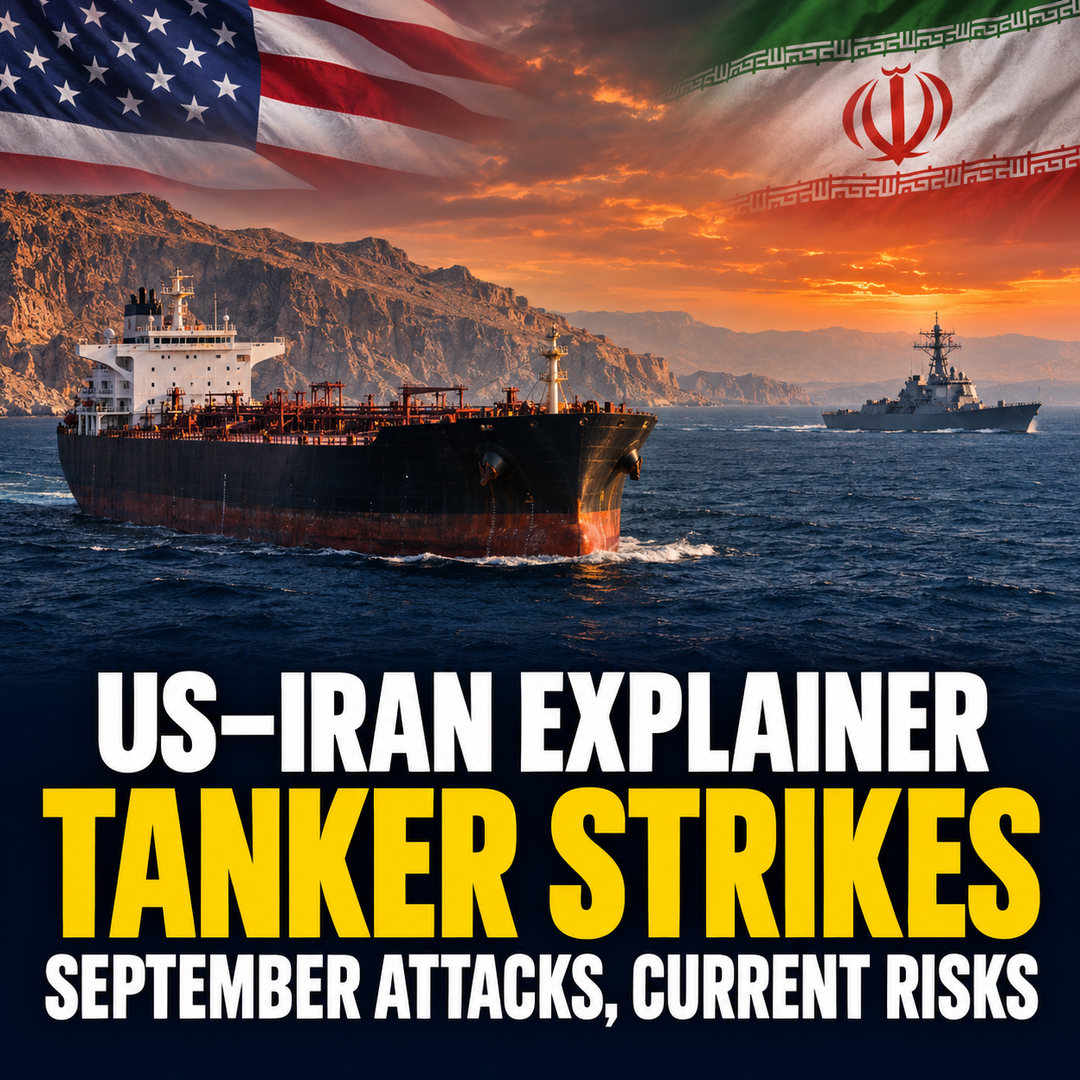
US strikes on Iranian oil tankers, followed by Iran’s claimed attacks on a US-used base in Jordan and ships near the Strait of Hormuz, formed a major escalation on 8–9 September 2026. Those events should be distinguished from separate shipping incidents reported this November. [1, 2]
This explainer sets out the September sequence and the latest developments available on 26 November. The dates matter: a renewed warning about Hormuz does not establish that the same attacks have happened again.
Why the US targeted Iranian tankers
The US military said it destroyed five Iranian oil tankers on 8 September. Central Command described the strikes as retaliation for attempts by Iran’s Revolutionary Guards to hit a US Navy warship with ballistic missiles twice over the preceding two days. Washington said no Americans were harmed. [2]
What Iran claimed in response
Iran’s Revolutionary Guards said they attacked 10 ships near Hormuz, including two US vessels and eight tankers. Tehran also said it fired ballistic missiles at a base used by American forces in Jordan. These were Iranian claims about its operations. [1]
ABC identified the base as being near Al Azraq. Jordan said it intercepted 18 of 20 missiles, with the other two landing in unpopulated areas and no casualties. A US official said all American troops were accounted for. [2]
The reported outcomes at sea were also disputed. Central Command denied that any US Navy warship had been struck. Iran’s claim to have attacked US vessels therefore should not be reported as confirmed damage to American warships. [2]
The separate November shipping developments
On 25 November, Iran’s Revolutionary Guards Navy said two tankers struck mines and caught fire in Hormuz while using an unauthorised route, according to Reuters. That report attributes the account to Iran; it does not establish a new US strike on Iranian tankers. [3]
Separately, a Joint Maritime Information Center advisory dated 22 November recorded three tanker attacks near Khasab, Oman, on 20–21 November. It described unknown projectiles and reported no crew casualties in those incidents. These entries concern different dates from Iran’s 25 November statement. [4]
The energy-market backdrop remains sensitive. Reuters reported Brent crude at $94.71 a barrel at 01:37 GMT on 26 November, amid supply concerns. That is a dated trading snapshot, rather than a live price. [5]
Impact and conclusion
Further disruption could expose crews to danger and increase shipping, insurance and fuel costs. For households and businesses in the UK, Pakistan and elsewhere, the potential impact extends beyond the conflict zone. The immediate priority is protecting seafarers and keeping trade moving. Understanding the risk also requires separating dated incidents, military claims and independently reported outcomes.
Sources and references
[1] Reuters. Iran and US hit tankers in biggest wave of attacks on shipping since war began. 9 September 2026; updated 10 September. Source link
[2] ABC News Australia, with Reuters/AP. Iran attacks US base in Jordan and ships near Strait of Hormuz after tankers sunk. 9 September 2026; updated 10 September. Source link
[3] Reuters. Iran says ships hit mines in Hormuz, warns vessels to coordinate passage. 25 November 2026. Source link
[4] Joint Maritime Information Center / UKMTO. Advisory update 116: Regional tension — impact on maritime security. 22 November 2026. Source link
[5] Reuters. Oil rises on supply concerns as Iran claims mine strikes on ships. 26 November 2026. Source link