More than eight months after the United States and Israel went to war with Iran on 28 February, the strongest pressure for restraint isn’t coming from Washington’s opponents. It’s coming from Washington’s closest Arab partners.
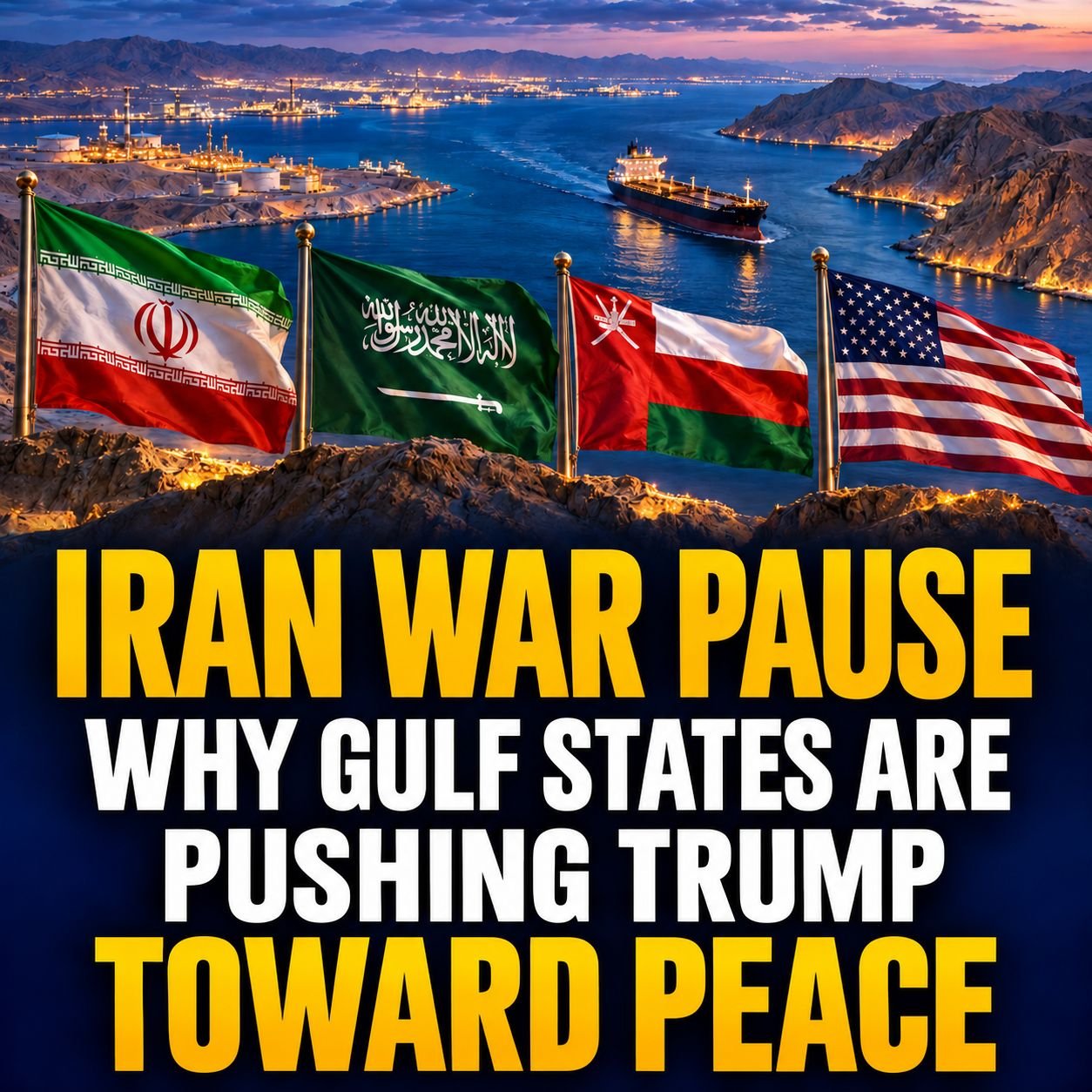
On Monday, President Donald Trump said he would hold off on new military strikes against Iran “at the behest of countries that are their neighbors.” He named Qatar, Saudi Arabia, the United Arab Emirates, Bahrain and Kuwait. He said this after White House talks with Qatar’s Prime Minister and Foreign Minister, Sheikh Mohammed bin Abdulrahman Al-Thani. Sheikh Mohammed had just come back from Tehran.
It isn’t a ceasefire. The US naval blockade in the Strait of Hormuz remains in place, and fighting at a lower level continues. Still, it marks a clear change in who is shaping the next phase of the war.
The Gulf has the most to lose
For the Gulf monarchies, this war isn’t happening somewhere far away. It’s on their doorstep.
Attacks on tankers in the Gulf and the Strait of Hormuz rose sharply in October. Maritime agencies say they’re now running at the highest rate since the war began. Iranian state television claims 11 tankers were “disabled” in just ten days. Iran’s Houthi allies in Yemen have hit Saudi territory. Every escalation threatens the shipping lanes, energy exports and investment climate that Gulf economies depend on.
So when Gulf leaders ask Washington to hold back, they aren’t sympathising with Tehran. They’re protecting their own interests. A wider war could leave them the most exposed, with their ports, oil facilities and cities in range of Iranian missiles and proxy attacks.
Qatar’s quiet leverage
Qatar is the key player. Doha has carried messages between the two sides since early in the war, and it’s one of the few capitals that both Washington and Tehran still treat as a credible go-between. Sheikh Mohammed met Trump and is also seeing Vice President JD Vance. He called the talks “positive” and said he was grateful for discussions “on reaching a deal.”
This follows a familiar pattern in Qatari diplomacy. Doha is small, wealthy and connected to everyone, and it turns access into influence. It has now persuaded the US president to delay military action. That shows Gulf mediation can directly shape the timing of American decisions.
The midterm factor
The timing matters too. The pause comes days after Republicans lost control of Congress in the US midterm elections. Senior Republicans, including Vance, have openly blamed those losses on the Iran war.
That gives Trump a domestic reason to listen to his Gulf partners. Holding back now lets him present restraint as a favour to allies rather than a retreat. He can still say the US remains, in his words, “fully locked and loaded.”
Why a deal is still far away
The diplomatic noise shouldn’t be mistaken for progress. The two sides remain far apart.
Iran’s proposal would end the US blockade of its ports, ease some sanctions and stop the bombing. In return, Tehran would lift its own blockade of the Strait of Hormuz, and talks on its nuclear programme would come later. Secretary of State Marco Rubio has rejected these conditions as “outrageous” and unrealistic. Iranian officials, for their part, dismiss talk of negotiations as “fake news” and insist Washington accept Iran’s seven conditions.
The fighting hasn’t stopped either. Iranian media reported US strikes on Qeshm Island overnight. An Iranian source said they targeted radar sites and missile- and mine-launching bases.
Even Gulf officials are cautious. The UAE’s Anwar Gargash warned that the region should prepare for “a long period of uncertainty.” He said neither a decisive outcome nor a stable regional order could be taken for granted.
*What to watch next
Qatar’s next move:* whether Doha can find a middle ground between Iran’s terms and Washington’s red lines, possibly by phasing sanctions relief against reopening the strait.
The Hormuz blockade: whether either side eases its blockade first as a goodwill gesture.
Tanker attacks: whether they continue or fall. That’s the clearest sign of whether Tehran is ready to de-escalate.
Washington’s politics: whether a Democratic-controlled Congress, and a nervous Republican party, push the White House further toward an exit.
*Conclusion: the Gulf has become the brake on escalation*
This pause shows something important. The countries that once wanted Washington to take a hard line against Iran are now its strongest voices for restraint. They have learned that they would pay the highest price for a war on their doorstep.
Trump’s decision to hold fire doesn’t end the conflict, and the gap between Washington and Tehran is as wide as ever. But for the first time in months, diplomacy, not strikes, is setting the pace. Whether that becomes a real peace now depends largely on Doha, Riyadh and Abu Dhabi. They’ll need to keep the pause in place long enough for a deal to take shape.