By Nazih Osseiran and Jihed Abidellaoui
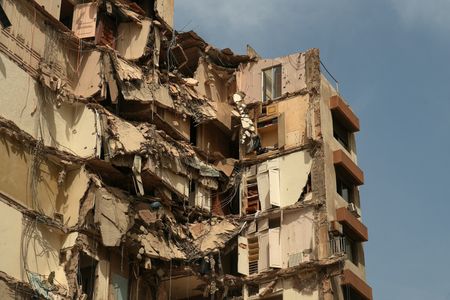
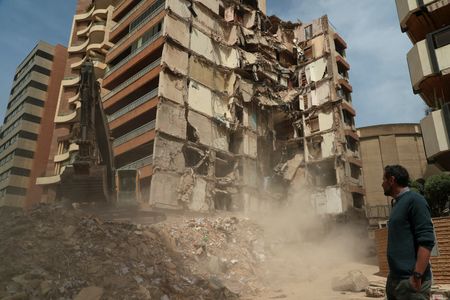
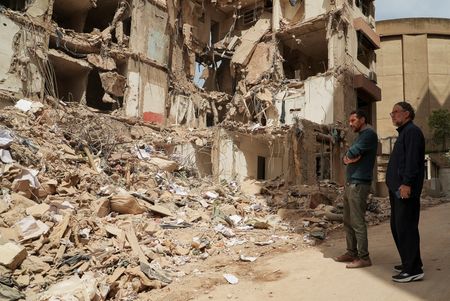
BEIRUT April 15 - Brothers Ali and Wael Sabbagh stood facing the remains of the building that contained their family home for more than 50 years.
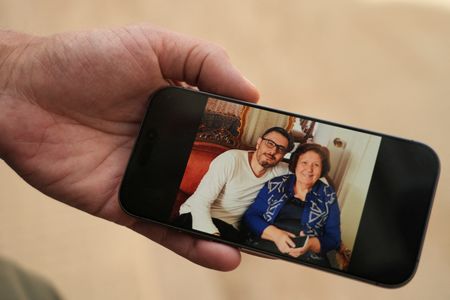
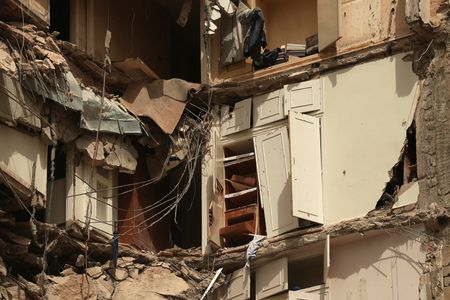
The site was pounded into rubble by Israeli strikes last week in an attack that killed their mother, brother, and the family's helper.
Their grief has been compounded by their inability to properly bury their mother and brother — a plight shared by other families from south Lebanon. Unable to head to their ancestral lands to honor their dead, they are forced to bury them temporarily in Beirut until it becomes safe enough to allow their remains to be moved to their final resting place.
"We come from the south of Lebanon, from Nabatieh, and that is being bombarded on a daily basis," Wael said. "We want them to be buried in the family cemetery, but unfortunately we're unable to do that."
FAMILY CANNOT RISK JOURNEY SOUTH
Israel has vowed to establish a buffer zone in southern Lebanon and maintain control over territory up to about 30 km (20 miles) north of Israel's border.
Nabatieh, a major city in the south, has been mostly reduced to rubble. The brothers said they cannot risk the journey south, nor can they send someone in their place for fear of them being killed in the strikes.
"Nobody should have to go through this. And unfortunately, my brother, sister, and I are not the only ones going through this," Wael said. "Hundreds, if not thousands, of families...are mourning in the same way I am, not understanding what happened."
The Israeli attacks on Beirut last week were some of the most violent strikes on the Lebanese capital in decades. Across the country, more than 350 people were killed, said Lebanese authorities.
More than 2,160 people have been killed in Lebanon by Israeli attacks since the war between Hezbollah and Israel erupted last month. Hezbollah had lobbed rockets at Israel, prompting Israel to retaliate and launch an all-out war on Lebanon. More than 1.2 million people have been displaced in Lebanon since, said Lebanese authorities.
The Israeli military has said its operations in Lebanon target Hezbollah.
Ali and Wael's mother's body was found in her home. It took two days for the family to track down their brother, whom they were able to identify by his arm tattoo. The family made arrangements to repatriate the body of the house helper to Ethiopia.
The brothers spoke to Reuters a day after Lebanese and Israeli officials met in Washington in a rare encounter between representatives of governments that have technically been in a state of war since Israel was established in 1948.
"We're always going to be under the foot of the Israelis," Wael said. The brothers said they will try to seek legal action against the people behind the killing of their family members.
Ali lamented the cycle of death, destruction and resurgence that has marked the lives of the Lebanese for most of their country's existence.
Already, behind the Sabbaghs' bombed-out home, construction workers were busy working on a new building.
"Come back in a few years, there's a new building, new kids, new mothers, new brothers," Ali said. "I will come. I will remember. Nobody else will."
(Editing by Toby Chopra)