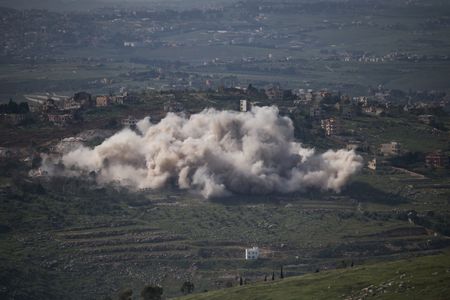
BEIRUT, April 27 (Reuters) - The Israeli military began carrying out strikes in eastern Lebanon on Monday, expanding the scope of its bombing campaign during a ceasefire that has failed to fully halt hostilities with Lebanese armed group Hezbollah.
The strikes on Lebanon's eastern Bekaa Valley marked the first time the area has been hit since a U.S.-brokered ceasefire came into force on April 16, significantly reducing the pace of attacks without entirely stopping the exchanges of fire.
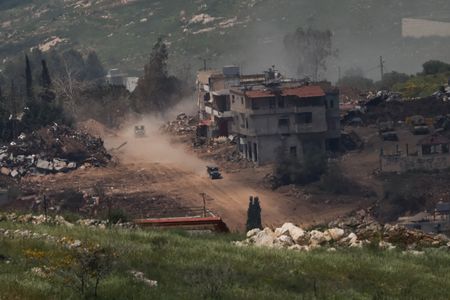
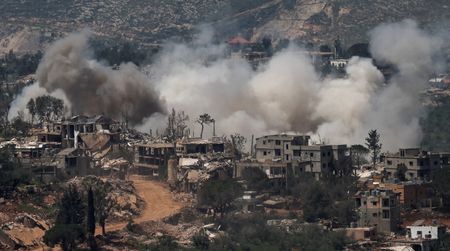
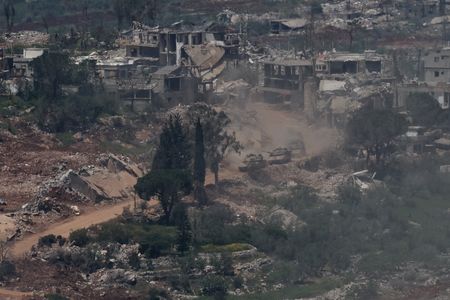
Israel has continued to carry out strikes across southern Lebanon, and its troops are occupying a strip of the country's south, destroying homes they describe as infrastructure being used by Hezbollah. The Iran-backed group, meanwhile, has kept up its drone and rocket attacks against Israeli troops in Lebanon and on northern Israel.
A spokesperson for the Israeli military said it was beginning to strike Hezbollah infrastructure in the Bekaa as well as areas in southern Lebanon. Security sources told Reuters strikes had hit near the town of Nabi Chit, near Lebanon's eastern border with Syria, with no immediate reports of casualties.
Lebanon's state media agency reported several strikes across the south that left at least three people wounded.
Hezbollah said on Monday it had attacked an Israeli tank in southern Lebanon with a drone. The Israeli military said a drone launched by Hezbollah exploded near its troops in southern Lebanon, without causing casualties.
LEBANESE PRESIDENT TAKES INDIRECT SWIPE AT HEZBOLLAH
More than 2,500 people have been killed in Israeli strikes across Lebanon since March 2, when Hezbollah fired on Israel in support of its ally Iran and triggered an Israeli ground and air campaign that has left swathes of southern Lebanon in ruins.
The war has deepened differences among people in Lebanon, who are divided over Hezbollah's arms and over prospective peace talks with Israel.
The Lebanese and Israeli ambassadors to the United States have met twice to discuss the ceasefire, intended to pave the way for direct talks to secure a peace deal between the longtime foes.
Hezbollah fiercely opposes direct negotiations, with its head Naim Qassem describing the talks in a written statement on Monday as a "humiliating and unnecessary concession."
"Let it be clear, these direct negotiations and their outcomes are considered nonexistent to us and do not concern us at all. We will continue our defensive resistance for Lebanon and its people," Qassem said.
Lebanese President Joseph Aoun has defended the government's move to engage in face-to-face talks and on Monday made a jab at Hezbollah without naming the group.
"What we are doing is not treason; rather, treason is committed by whoever takes his country to war to achieve external interests," he said in a statement released by his office, an apparent reference to Hezbollah's decision to enter the regional war last month.
"Some hold us accountable for deciding to go to negotiations on the pretext of the lack of national consensus, and I ask: When you went to war, did you first obtain national consensus?" Aoun said.
(Reporting by Maya Gebeily; Editing by Hugh Lawson)