(Corrects hyperlinks in paragraphs 6-8, no change to text)
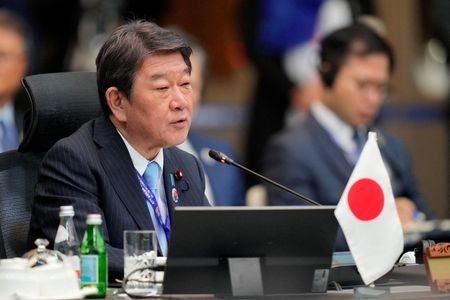
TOKYO, March 22 (Reuters) - Japan could consider deploying its military for minesweeping in the Strait of Hormuz, a vital artery for global oil supplies, if a ceasefire is reached in the U.S.-Israeli war on Iran, Foreign Minister Toshimitsu Motegi said on Sunday.
"If there were to be a complete ceasefire, hypothetically speaking, then things like minesweeping could come up," Motegi said during a Fuji TV programme. "This is purely hypothetical, but if a ceasefire were established and naval mines were creating an obstacle, then I think that would be something to consider."
Japan's military actions are limited under its postwar pacifist constitution, but 2015 security legislation allows Japan to use its Self-Defense Forces overseas if an attack, including on a close security partner, threatens Japan's survival and no other means are available to address it.
Tokyo has no immediate plans to seek arrangements to allow passage through the Strait of Hormuz for stranded Japanese vessels, Motegi said, adding it was "extremely important" to create conditions that allow all ships to navigate through the narrow waterway, the conduit for a fifth of the world's oil shipments.
Iranian Foreign Minister Abbas Araqchi told Japan's Kyodo news agency on Friday that he had spoken to Motegi about potentially letting Japanese-related vessels pass through the strait.
Japan gets around 90% of its oil shipments via the strait, which Tehran has largely closed during the war, now in its fourth week. A spike in global oil prices has prompted Japan and other countries to release oil from their reserves.
U.S. President Donald Trump met Japanese Prime Minister Sanae Takaichi on Thursday, urging her to "step up" as he presses allies - so far unsuccessfully - to send warships to help open the strait.
Takaichi told reporters after the Washington summit that she had briefed Trump on what support Japan could and could not provide in the strait under its laws.
(Reporting by Satoshi Sugiyama; Editing by William Mallard)