JOHANNESBURG, June 4 (Reuters) - Kenyan President William Ruto on Thursday said his government was doing "the right thing" by allowing the United States to set up an Ebola quarantine facility in Kenya.
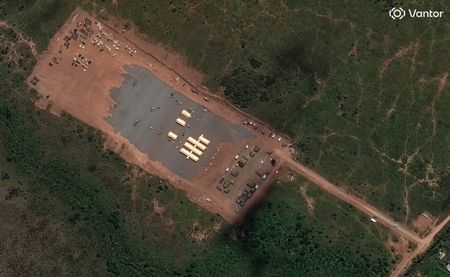
Satellite imagery seen by Reuters showed the U.S. government is moving ahead rapidly with setting up the facility at an air force base in central Kenya, despite protests and Kenyan court orders blocking it.
The tented facility in Nanyuki, a town in central Kenya, is due to host a 50-bed unit for Americans who might be exposed to the virus, which has infected hundreds in the Democratic Republic of Congo, the epicentre of the outbreak.
The outbreak has also spread to neighbouring Uganda, which has reported 16 cases.
"I can tell you without fear of any contradiction, and I can look at everybody in the eye, ... and tell you we are doing the right thing," Ruto told a press conference during his state visit to South Africa.
"It would be most unfortunate if on one request by the Americans to set up a facility at their cost, we would refuse, we would look very inhuman," Ruto added.
The U.S. plans to provide transportation to Americans in the region to the Kenya facility whenever needed, including by plane, an administration official told Reuters.
"At this moment in time, we are not aware of any Americans who are set to be transferred to the bio isolation facility," the official added.
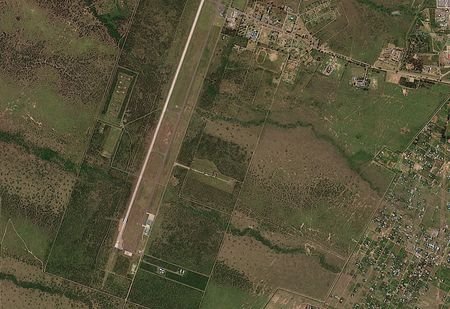
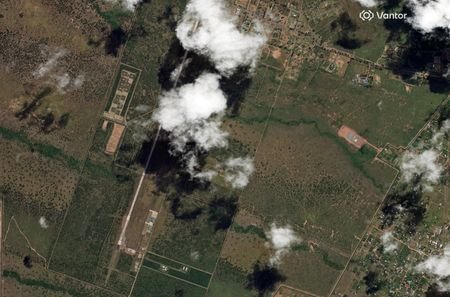
Since May 27, a block of land totalling around 0.046 square kilometres or 11 acres within the Laikipia Air Base has been cleared, according to satellite imagery seen by Reuters.
By June 4, a collection of connected white tents had been set up in the middle of the clearing, where tarmac appears to have been laid.
There are further structures, earth-moving equipment and other vehicles also visible in the cleared section, which lies to the east of the runway.
On Thursday, more flights landed at the air base, with people and heavy equipment on board, an eyewitness told Reuters.
At least two people were killed earlier this week in protests in Nanyuki against the base.
A Kenyan court first ordered work on the Ebola facility to be suspended on May 28. The U.S. embassy in Nairobi has said it is working with the Kenyan government to resolve any objections.
(Reporting by Nilutpal Timsina; additional reporting by Noor Ali in Isiolo, George Sargent and Seoyun Kang; Editing by Alexander Winning, David Lewis and Hugh Lawson)