By Michael Holden
LONDON, Oct 12 (Reuters) - British Prime Minister Andy Burnham said on Monday that a suspected plot targeting the RAF Fairford air base in Britain was "highly likely" to have been coordinated in Iran, and almost certainly directed by the Islamic Revolutionary Guard Corps.
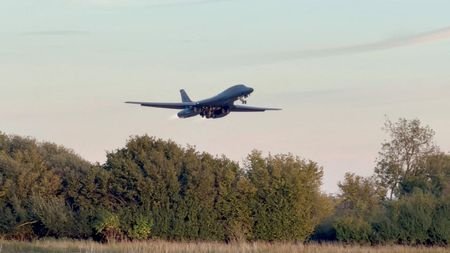
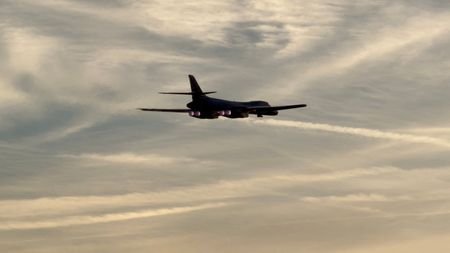
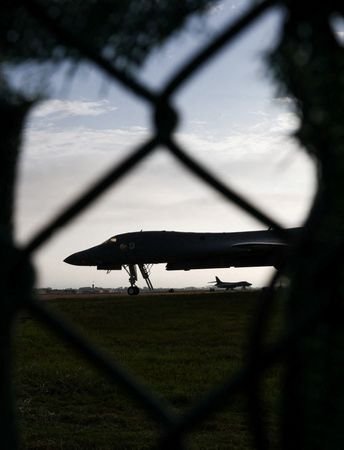
The RAF Fairford base in southwest England, which had been used by US bombers to carry out strikes on Iran, became the focal point for a major security response after five British men were arrested nearby in the early hours of September 27 on suspected terrorism and explosive offences.
US officials have told Reuters that there had been a suspected plot involving Iran to launch a drone attack, and last week US President Donald Trump said a threat linked to Iran had prompted a decision to withdraw the bombers from the base.
"I can confirm our assessment that it is highly likely to have been coordinated in Iran, almost certainly directed by Iran's Islamic Revolutionary Guard (IRGC)," Burnham told parliament.
Tehran has rejected any suggestion it was involved in the Fairford incident, saying it amounted to "unfounded and malicious speculations".
FAIRFORD PLOT DETAILS SKETCHY
Details around the suspected plot remain thin. The five detained men were later released without charge on police bail "under stringent conditions", and two other arrested men, including a British-Iranian national, have also been released.
Detectives have said petrol but no viable explosive had been found in vans seized along with the five men. However, both police and Burnham have pointed towards the involvement of a foreign state.
"We will not tolerate these threats on our soil," Burnham said. "We will crack down on Iran's use of criminal networks, using our full range of powers to target them and their funding streams, and we will bring further sanctions to restrict the capacity of Iran and the IRGC to do us harm."
Foreign ministries from almost 30 countries including the US, Canada, France and Germany issued a statement condemning "Iran’s use of violent attacks, including the acts of lethal plotting, arson, sabotage, cyber-attacks, and other hybrid activities against us and our partners".
"The UK has also concluded this event demonstrates the IRGC’s continued willingness to project hostile activity beyond its borders through covert networks and proxy actors," the statement said.
The British authorities have for a number of years accused Iran of being involved in numerous plots and attempted assassinations in Britain using criminal networks and proxies, accusations Tehran has repeatedly denied.
Last year Britain said there had been 20 credible Iranian-backed threats to kill or kidnap individuals based in the UK.
In July, Britain used new powers to ban support for the IRGC and a linked group, Harakat Ashab al-Yamin al-Islamiya (HAYI), which had claimed responsibility for seven attacks earlier this year at locations linked to Jewish and Israeli communities, and Persian-language media.
British foreign minister Ed Miliband said he had summoned the Iranian ambassador while the ministry announced two Iranian nationals had been sanctioned.
The two men were Ruhollah Bazghandi, who Britain said was the IRGC's Head of Counterespionage Operations, and Shahram Ali Reza Tamarzadeh Jakki, a facilitator for the already sanctioned Zindashti criminal network which is accused of involvement in several plots against Iranian dissidents.
(Reporting by Sam Tobin; writing by Michael Holden; editing by Kate Holton and Toby Chopra)