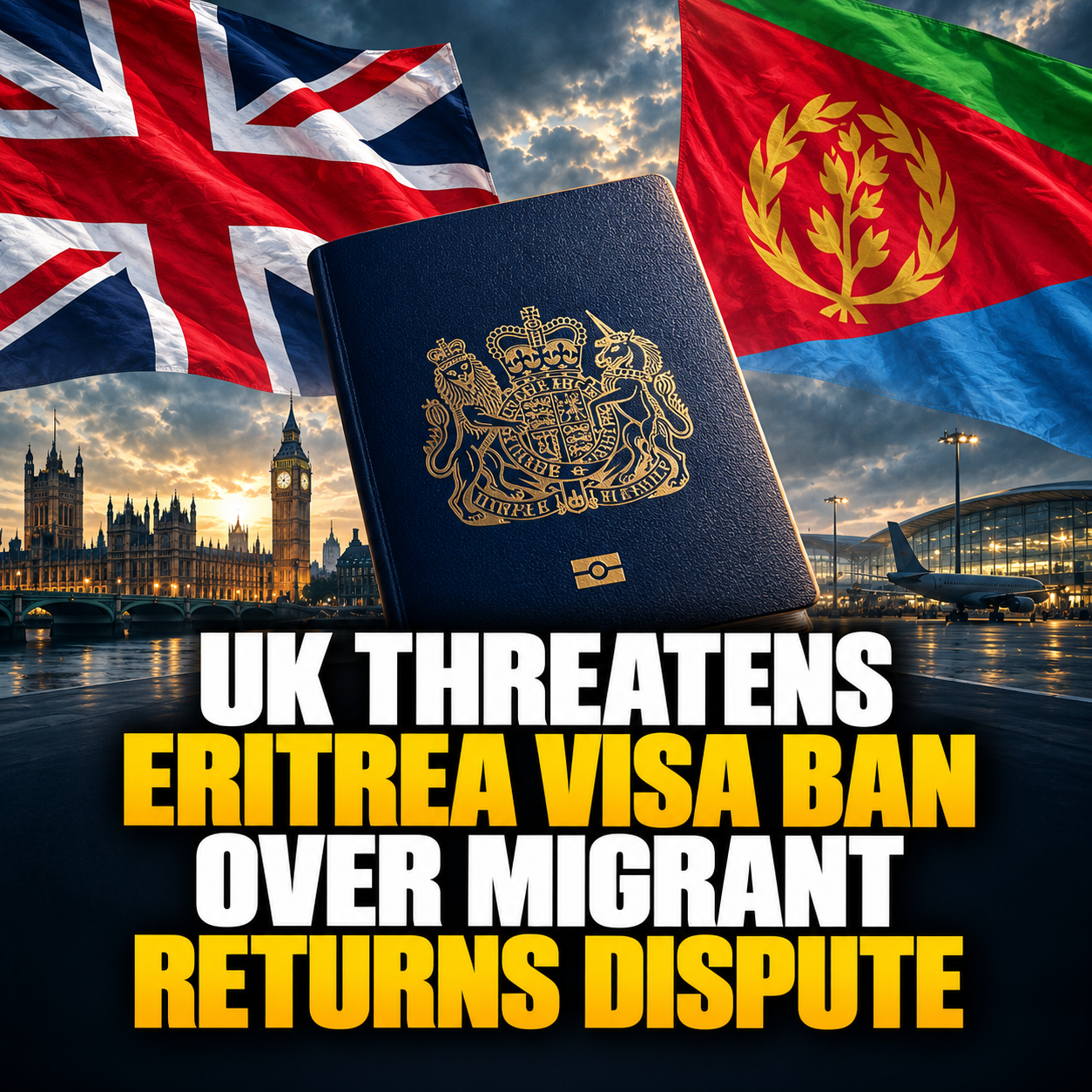
Britain has withdrawn preferential visa processing for Eritrean officials and restricted diplomats’ travel, while warning that wider penalties could follow unless cooperation on returns improves.
LONDON: Home Secretary Shabana Mahmood has threatened to block visas for Eritrean nationals unless the country agrees to accept the return of citizens with no right to remain in the UK.
The warning, announced on Thursday, 15 October, follows what the Home Office described as Eritrea’s withdrawal from cooperation on returns earlier this year. British officials said efforts to resolve the dispute privately had failed.
Restrictions introduced for officials and diplomats
The Home Office has ended preferential visa processing for Eritrean VIPs and government officials.
Eritrean diplomats must also obtain Foreign Office permission to travel more than 60 kilometres beyond London. The government said this mirrors restrictions imposed on British officials travelling outside Eritrea’s capital, Asmara.
The wider visa shutdown remains a threatened escalation, conditional on Eritrea’s response. The announcement introduced targeted restrictions rather than an immediate ban on all Eritrean applicants.
Eritrea rejects Britain’s account
Eritrea’s embassy rejected the allegations, saying Britain had failed to engage in meaningful dialogue about the dignified return of citizens.
The embassy has also said Britain has not issued a visa to an Eritrean official since 2023, according to The Independent. Its response challenges the UK’s description of the diplomatic dispute.
Regular visa numbers remain small
Home Office figures reported by The Independent show that Eritrean nationals received 77 work visas and 33 study visas in the year ending June 2026. A further 269 visitor visas were issued over the same period.
Those figures contrast with Eritrea’s prominence among people crossing the Channel in small boats. The Independent reported that 5,875 Eritrean nationals arrived by that route during the year, representing 18 per cent of arrivals whose nationality was known.
The newspaper also reported an initial asylum grant rate of 84 per cent for Eritreans.
Returns and refugee protection raise different questions
Dr Madeleine Sumption, director of Oxford University’s Migration Observatory, questioned how much impact the pressure on Eritrea would have.
Speaking to BBC Radio 4’s Today programme, in reporting republished by The Star, she said most Eritreans claiming asylum could not be removed because their applications succeeded. She noted that further applicants could receive protection following an appeal.
The figures distinguish people granted refugee protection from those whom the government is seeking to return after their claims have been rejected or because of criminal offending.
Visa pressure used in earlier disputes
Britain has previously used the threat of visa restrictions to secure cooperation on returns from Angola, Namibia and the Democratic Republic of Congo.
According to the Home Office, Angola and Namibia agreed enhanced arrangements following earlier warnings. Restrictions were imposed on the DRC but subsequently lifted after cooperation improved.
The government is seeking a similar change from Eritrea, while the two countries continue to dispute responsibility for the breakdown in talks.