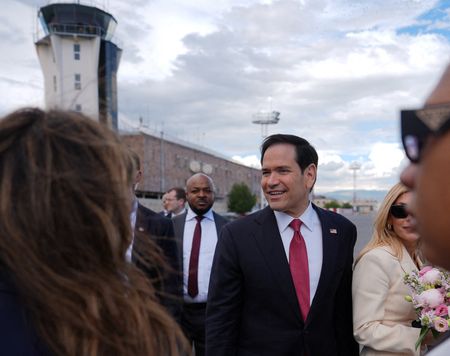
BRASILIA, May 28 (Reuters) - The United States plans to designate Brazil's two biggest criminal gangs as terrorist organizations, U.S. Secretary of State Marco Rubio said, opening the door for more aggressive interventions after appeals from the opposition in Brasilia.
The administration of President Luiz Inacio Lula da Silva has tried to avoid such designations, fearing they may pave the way for eventual U.S. military action or sanctions against banks that unknowingly do business with gang members.
In a meeting with Trump this week in Washington, Brazilian Senator Flavio Bolsonaro, who is preparing a run for president with the blessing of his father, ex-President Jair Bolsonaro, said he asked for the U.S. to label the groups as terrorists.
Aides to the senator, who also met with Rubio, have flagged the issue as a way to raise the prominence of voter concerns about crime in the October presidential election, while playing up his alignment with the Trump administration.
While the FTO designation was planned to take effect from June 5, the U.S. Department of State also designated the gangs Primeiro Comando da Capital, known as PCC, and Comando Vermelho, known as CV, as "Specially Designated Global Terrorists" on Thursday, Rubio said in a statement.
Rivals for trafficking routes and influence in Brazilian prisons, the PCC and CV dominate the drug trade in much of the country and have expanded ties around Latin America.
Rubio said the gangs were two of the "most violent criminal organizations in Brazil" and their influence and networks extend across the region and into the United States.
"The Trump Administration will continue to use all available tools to protect our nation and our national security interests by keeping illicit drugs off our streets and disrupting the revenue streams funding violent narco-terrorists," Rubio said.
Celso Amorim, Lula's top foreign policy adviser, reacted cautiously to the announcement.
"International cooperation is welcome, especially on topics such as money laundering and arms trafficking. Using it as a pretext for intervention is unacceptable."
Brazil's Foreign Ministry and the presidential palace did not immediately respond to requests for comment.
(Reporting by Ryan Patrick Jones in Toronto, Ismail Shakil in Ottawa, Lisandra Paraguassu and Ricardo Brito in Brasilia; Additional reporting by Andre Romani in Sao Paulo; Editing by Brad Haynes and Lincoln Feast.)