By Sybille de La Hamaide
PARIS, June 5 (Reuters) - World food prices slipped in May from a revised April level, with vegetable oil prices falling for the first time this year while cereals and sugar jumped, the United Nations Food and Agriculture Organization said on Friday.
The FAO Food Price Index, which measures changes in a basket of globally traded food commodities, averaged 130.8 points in May, 0.2% down from its revised April level of 131.0, but up 2.9% from a year earlier.
Despite the small downward correction for the April data, the index remained near its highest level since January 2023 and 18.4% below its March 2022 peak.
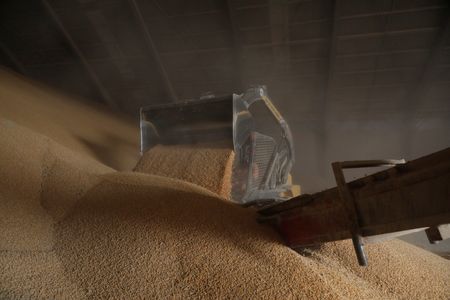
Cereal prices rose more than 2.6% on the month, with wheat up for a fourth straight month on smaller export harvest prospects, including in the United States, and higher fuel and fertiliser costs linked to the Iran conflict.
Maize prices were also supported by stronger import demand and tighter supplies in Brazil and the U.S., the agency said.
By contrast, vegetable oil prices fell 4.6% from last month, their first monthly decline this year, as lower palm and soy oil prices outweighed gains in rapeseed and sunflower oil. After rising for five consecutive months, international palm oil prices declined, reflecting expectations of weaker global import demand and uncertainty in crude oil markets.
Vegetable oil prices on average were still more than 20% above last year, as elevated energy costs following the effective closure of the Strait of Hormuz raised demand for biofuels made using organic materials, such as oil-rich plants.
Sugar prices jumped 7.5% from last month to 95.1 points, but remained 13.1% below their level a year ago. The increase was mainly driven by concerns over an anticipated tightening of global sugar supplies in the coming months.
In a separate cereal supply report, the FAO said it expected world cereal production - including rice in milled equivalent - to shrink 2% in 2026/27 to 2.98 billion tons.
Production of all major cereals is anticipated to decline, albeit for many from record levels reached in 2025, with the largest year-on-year decrease in percentage terms forecast for wheat and the smallest for maize and barley.
(Reporting by Sybille de La Hamaide; Editing by Emelia Sithole-Matarise)