MOSCOW, Sept 22 (Reuters) - The Kremlin said on Tuesday it welcomed the fact that Germany's far-right AfD party wants dialogue with Moscow, contrasting that with what it called the confrontational stance of Chancellor Friedrich Merz.
Reuters reported last week that Russian President Vladimir Putin's top economic envoy and the AfD leadership had begun preparations to meet next year to discuss restarting gas supplies from Russia to Germany.
The anti-immigration Alternative for Germany (AfD) took first place in two regional elections in eastern Germany this month and is leading in nationwide opinion polls but it is in opposition in the federal parliament so the meeting will have no impact on German government policy.
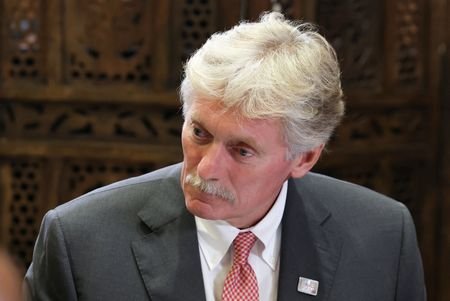
Kremlin spokesman Dmitry Peskov told reporters he had no information about reported attempts by the AfD to establish contact with Moscow.
"However, as a political force in Germany — one that is currently popular, showing a steady upward trend and talking about the expediency of establishing relations with our country — this can't fail to appeal to us," he said.
Peskov said Merz, on the other hand, had made only confrontational remarks about Russia. Merz's conservatives currently govern Germany in a coalition with the centre-left Social Democrats.
Restoring energy ties with Russia is among the main priorities of the AfD. It has criticised Merz's support for Ukraine as costly and needlessly provocative towards Moscow.
Merz's government and other political parties have in turn criticised the AfD's stance on Russia, which German intelligence services blame for a series of hybrid attacks on Germany, including a recent attempted drone attack on Leipzig airport.
The party has so far been kept out of government at state level by the so-called "firewall" policy of the other main parties, which all rule out cooperating with it.
It is currently trying to form a government in the state of Saxony-Anhalt, where it fell just short of winning an absolute majority in a September 6 election.
In the second state election, in Mecklenburg-Western Pomerania, it also won first place but did not win enough support to form a government.
(Reporting by Dmitry Antonov; Writing by Gleb Stolyarov; Editing by Mark Trevelyan and Gareth Jones)