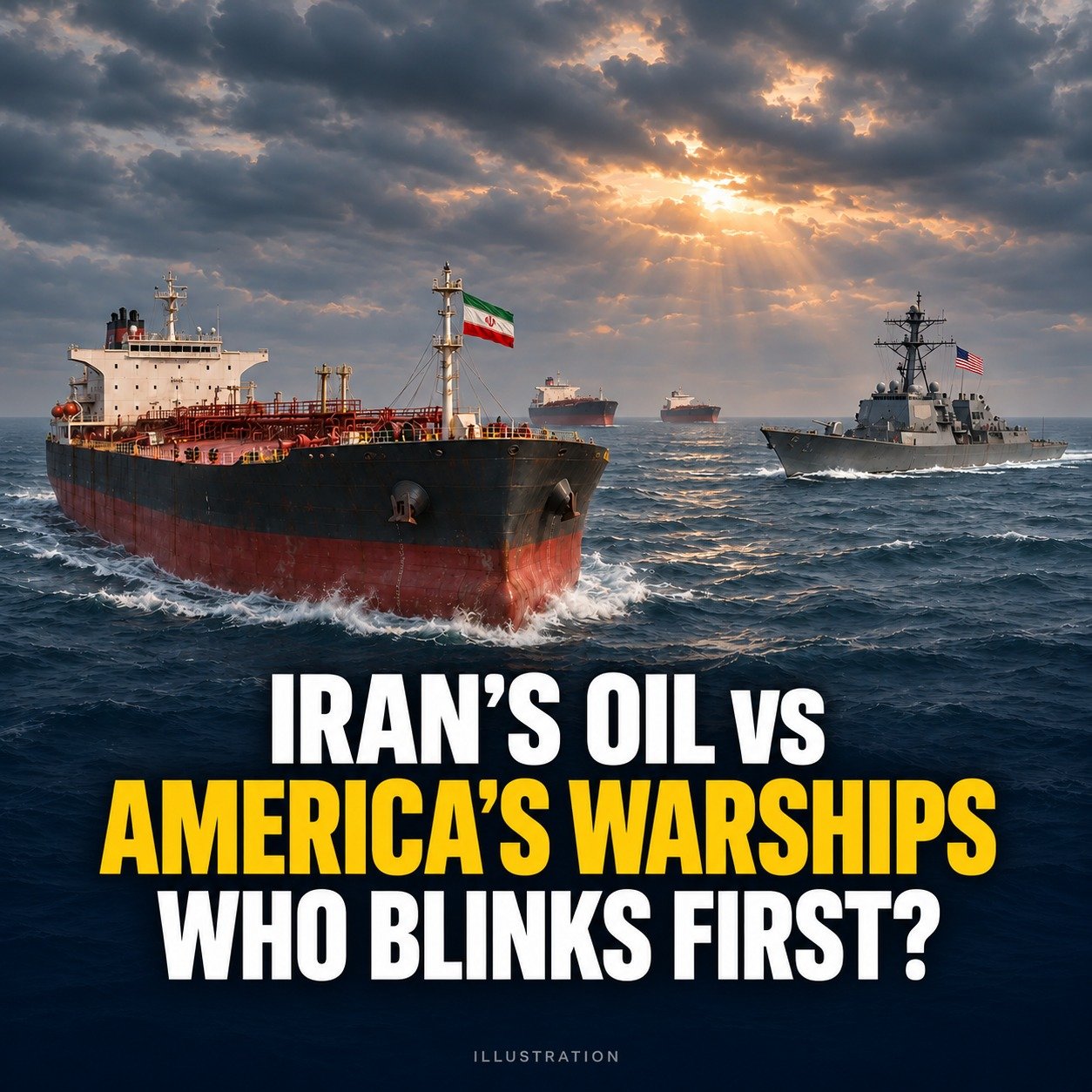
Iranian hardliners are pushing a defiant argument: Washington cannot be allowed to decide whether Iran sells its own oil. After months of a US naval blockade that has choked Tehran's exports, the question is no longer whether Iran wants to break it. It's whether Iran is willing to risk a direct naval confrontation to try.
The push to break the blockade
The pressure has grown quickly over the past week. On 20 November, Foreign Minister Abbas Araghchi told ILNA that "the blockade must be broken." He also said Iran would keep pursuing negotiations alongside its efforts to export oil.
Other officials went further. Deputy Foreign Minister Kazem Gharibabadi called the blockade "an act of war." Friday prayer leaders and at least one MP called for tankers to be readied and for an ultimatum to be issued to Washington.
The boldest idea came from Fars, the news agency close to the Revolutionary Guards. Fars proposed a tanker convoy, reportedly called "Operation Fereydoun," to sail through the blockade towards China. It warned that if Iranian ships were attacked, Gulf oil facilities could be hit in return.
What Tehran has, and hasn't, confirmed
Iran's own Tasnim news agency adds a crucial twist. It said the widely circulated convoy operation was never officially announced by the government, the armed forces or the Supreme National Security Council, and it called claims of an imminent operation "baseless." At the same time, it insists Iran does plan to break the blockade, and that operational details remain with military and security decision-makers.
Reports that 14 or more loaded tankers are gathering near Kharg Island come from foreign media, not official Iranian sources. One Fars correspondent who predicted attacks on Gulf oil later described his comments as "personal analysis."
This mix of loud rhetoric and official denial is deliberate. It lets Tehran signal resolve and test Washington's response without committing to a move it might not be able to carry out.
Washington tightens the squeeze
The US has gone the other way. CENTCOM widened the blockade on 18 November to cover ship-to-ship transfers, closing a route Iran had used to move oil quietly.
In a Fox News interview on 21 November, President Trump said he was inclined to resume strikes after the new year if no deal is reached, while insisting he wants a "permanent" agreement. Some outlets have reported that he warned blockade runners would be sunk.
So far, no reporting has verified a successful convoy passage past US forces.
The Gulf caught in the middle
The danger for the region is that the standoff doesn't stay at sea. On 21 November, Bahrain said its air defences intercepted several Iranian aerial attacks, and an industrial facility caught fire. Two people were injured, one of them a Pakistani resident in critical condition. UK maritime authorities have recorded repeated strikes on vessels in and around the Strait of Hormuz.
This is why Gulf capitals are pushing hard for diplomacy. A Qatari delegation was in Tehran last week. If Iran links any attack on its tankers to Gulf energy infrastructure, Saudi Arabia, the UAE and Qatar could find themselves on the front line of a fight they have tried to avoid.
Who blinks first?
Each side is betting the other will back down.
- Iran's bet: the US won't risk a naval clash, a spike in oil prices and Gulf instability just to stop a few tankers, especially after Republican losses in the midterms.
- Washington's bet: Iran is too weak to fight a direct naval battle, and its threats are mostly about getting leverage at the negotiating table.
Both bets carry real risk. A single seized or sunk tanker could trigger retaliation that neither side fully controls.
Conclusion: raising the cost of saying no
Tehran's strategy is becoming clear. If it can't win the argument at the negotiating table, it will try to make stopping its oil more costly than letting it through. Whether that means a real convoy or just the threat of one, the aim is the same: force Washington to choose between escalation and compromise.
For now, the tankers haven't sailed, and the warships haven't fired. But the gap between rhetoric and action is shrinking. The coming weeks before Trump's new-year deadline may decide whether this ends in a deal or in the most dangerous moment of the war so far.