By Dave Sherwood and Ayose Naranjo
HAVANA, July 7 (Reuters) - Cuba said it had reconnected most of the country to the national grid by late on Tuesday, though millions remained without power as the island nation struggles to generate even one-third of current demand during an ongoing U.S. fuel blockade.
Authorities have yet to fully explain the cause of Monday's nationwide blackout. The country's third blackout this year has left an already exhausted population of nearly 10 million people in the dark overnight.
The country's grid operator UNE said late on Tuesday it had reconnected the grid from Pinar del Rio, in far western Cuba, to Holguin in the east. Santiago de Cuba, the island's second largest city, remained disconnected and without power, authorities said.
About two-thirds of the capital Havana had seen power restored by late Tuesday, though another unexpected widespread outage hit the city around 6 p.m. ET.
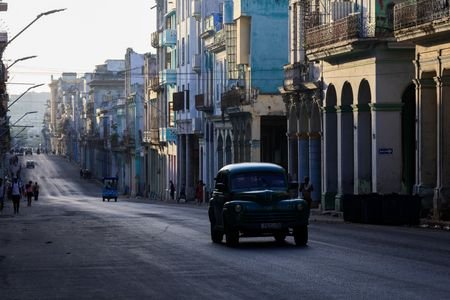
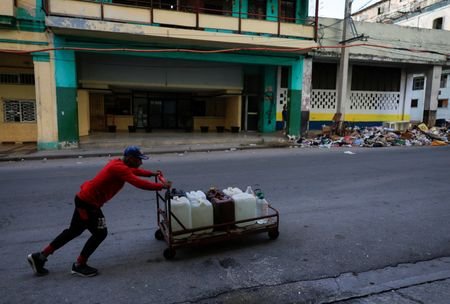
Havana residents, now accustomed to blackouts spanning 30 hours or more, had largely resigned themselves to another night of swatting mosquitoes and little sleep.
"I don't see a quick fix to this problem," said Amauri Gonzalez, a local resident who had stepped outside his home for a bit of fresh air. "Our power plants are obsolete and there's no fuel."
UN DEBATE
The U.S. has sought to strangle Cuba's communist-run government into submission, cutting off the island's fuel supply and imposing fresh sanctions that have prompted an exodus of foreign businesses and a near complete collapse of tourism.
Cuba and the United Nations (UN) have called U.S. President Donald Trump's sanctions a violation of international law and the human rights of the island's residents.
Talks between the two nations have stagnated, according to both Cuban and U.S. officials.
The UN General Assembly, in a meeting at Havana’s request, voted overwhelmingly on Tuesday to debate U.S. sanctions against Cuba.
U.S. Ambassador to the United Nations Michael Waltz said Cuba's government was to blame for electricity shortfalls.
"Change your ways and turn the lights back on for your people," he said during the U.N. debate.
The vast majority of countries that spoke during the debate called on Washington to end the now six-month-long fuel blockade and reverse sanctions that have crippled the island's economy.
(Reporting by Dave Sherwood and Ayose Naranjo in Havana; Editing by Andrea Ricci and David Gregorio)