By Samia Nakhoul and John Irish
DUBAI/PARIS, Nov 17 (Reuters) - After nearly nine months of war, the United States and Iran are each acting as if they have time on their side, a calculation that has locked them in a stalemate that is almost impossible for either to break.
It is a risky gamble, with two former US Middle East negotiators, European officials and Gulf sources saying fighting could resume before a diplomatic exit becomes possible.
US President Donald Trump has chosen to squeeze Iran rather than hit it hard again or concede. Persuaded that renewed bombing would not change the outcome and could trigger Iranian reprisals against Gulf energy infrastructure, he has held off.
Trump is counting instead on a naval blockade of Iran and economic pain forcing Tehran to give ground and agree to concessions on its nuclear programme.
Iranian leaders have drawn the opposite conclusion.
Emboldened by election setbacks for Trump's Republican Party and for Israeli Prime Minister Benjamin Netanyahu, they have raised the cost of a peace deal for the US, demanding that Washington make the first move towards a resolution.
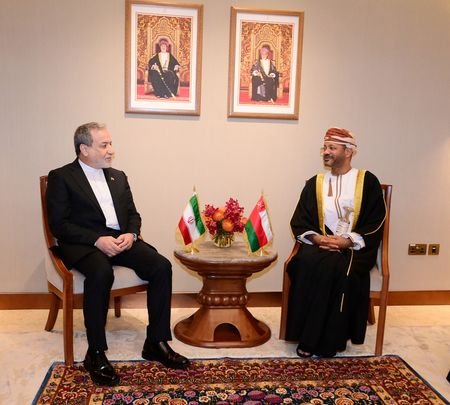
Tehran says it is open to diplomacy, and was meeting Omani and Qatari mediators on Tuesday, but accuses Washington of pursuing coercion and says it will not yield to US pressure.
"There's a dual reality. Trump doesn't have good options, and the Iranians don't have good options," said Dennis Ross, a former US Middle East negotiator. "They're each defining what it takes to end it (the war) in a way that is contradictory to the other side, and the other side can't accept it."
A senior European official said Washington's demands were too costly for Iran to accept, while Tehran's demands were too politically costly for Washington.
BURIED URANIUM
A second senior European official, briefed by his country's intelligence agency, said the US military campaign had "achieved the opposite of what was intended".
It had strengthened Iran, rallied power around its most hardline figures and "worsened the nuclear problem rather than solving it," said the official, who spoke on condition of anonymity because of the sensitivity of the matter.
The first European official, and a separate Western official, said intelligence reports indicated that a "significant portion" of Iran's stockpile of highly enriched uranium was probably buried deep inside Pickaxe Mountain, a heavily fortified underground facility near Iran's Natanz nuclear complex.
"There is every incentive for Iran to pursue a clandestine nuclear programme designed to ensure deterrence against future US military intervention," the first European official said.
Iran, which says its nuclear programme is for civilian purposes only and denies seeking a nuclear bomb, has said it will not let nuclear inspectors back in while the war continues.
Aaron David Miller, a former US Middle East negotiator, describes Washington's choices as escalation, negotiation, capitulation or strangulation.
For now, he says, Washington has chosen the last option, while retaining the possibility of military action before Democrats take control of Congress in January.
A THIRD OPTION
A US official said "the economic pressure campaign is devastating Iran to such an extent that the president does not have any need to conduct major combat operations," and that the president had "all options at his disposal" to prevent Tehran from acquiring a nuclear weapon.
Secretary of State Marco Rubio told G7 ministers in Paris last week that Washington was not trapped between renewed war and a weak deal, according to four diplomats present.
Rubio said there was a third option: sustained economic pressure to show the Iranians "that they do not control the game" until they make concessions that could allow what he depicted as a balanced agreement.
European officials believe Trump has for now settled on the third option, though one said the president could reverse course at a moment's notice. One of the senior European officials said Trump had not entirely abandoned military action, and that the current lull was widely seen as a grace period for diplomacy.
Gulf states had warned Trump that renewed bombing could trigger Iranian retaliation against their infrastructure, two Gulf sources told Reuters. Gulf Cooperation Council Secretary-General Jasem Al-Budaiwi said last week member states had been hit by over 7,000 Iranian missiles and drones during the war.
"The United States strikes Iran, but Iran does not strike America directly — it strikes the Gulf instead," said Ebtesam Al-Ketbi, president of the Emirates Policy Center think tank. "The Gulf states have no stick with which to threaten Iran. America has a stick, but it is broken."
A Gulf source said: "Everybody urged Trump not to attack, and he didn't want to either."
Trump now has a small window to act — and three aircraft carriers in the region.
"Will he seize the moment? It's difficult to read Trump," the Gulf source said.
Indirect US-Iran talks are stuck on sequencing, said all the sources who spoke to Reuters.
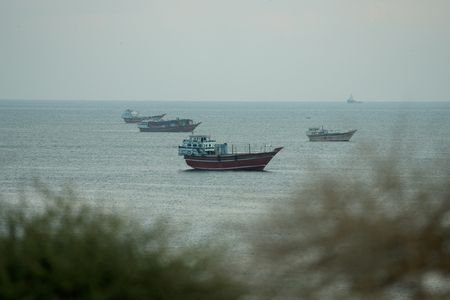
They said Tehran wants the blockade lifted, frozen assets released and its oil sales restored before substantive talks begin. It also wants an end to hostilities across all fronts, they said, and a recognised role in managing passage through the Strait of Hormuz, a vital conduit for global energy supplies.
In return, it would reopen Hormuz and give only a promise to discuss its nuclear programme later, they added, with Washington wanting reciprocal and simultaneous steps, including verifiable commitments on the nuclear programme from the outset.
WHO MOVES FIRST?
Qatar's prime minister briefed the G7 countries in Paris after holding talks with Trump. One of the European officials said he "did not come to tell us that he had found the solution," but described a mediation that remains alive but faces significant gaps.
The European officials said the nuclear issue must be part of the first stage of talks and that Iranian demands to settle the Strait of Hormuz blockade, have sanctions on it lifted and only afterwards allow back inspectors were unacceptable.
A deal is likely only if both sides make concessions — not to each other but to third parties, chiefly the Gulf states, they said. That would enable Iran to accept terms as meeting regional rather than US demands.
Inside Iran, nobody is in a position to agree a deal, political analysts say. One European official said a hard core of Revolutionary Guards officers who believe they have won has no interest in negotiating, making Foreign Minister Abbas Araqchi's task at negotiations practically impossible.
Alan Eyre, a former US diplomat who worked on nuclear negotiations with Iran, said hardliners had watched parliament speaker Mohammad Baqer Qalibaf — an unsuccessful presidential candidate — pay a political price for his link to an earlier interim agreement.
"Everyone is scared of being the softest hardliner," he said.
The US naval blockade may yet force a decision before diplomacy can, Eyre said.
"Eventually, if the US doesn't lift the blockade, Iran is going to escalate because they can't last," he said.
(Additional reporting by Jonathan Landay and Phil Stewart in Washington, Writing by Samia Nakhoul, Editing by Timothy Heritage)